 Save to Pinterest
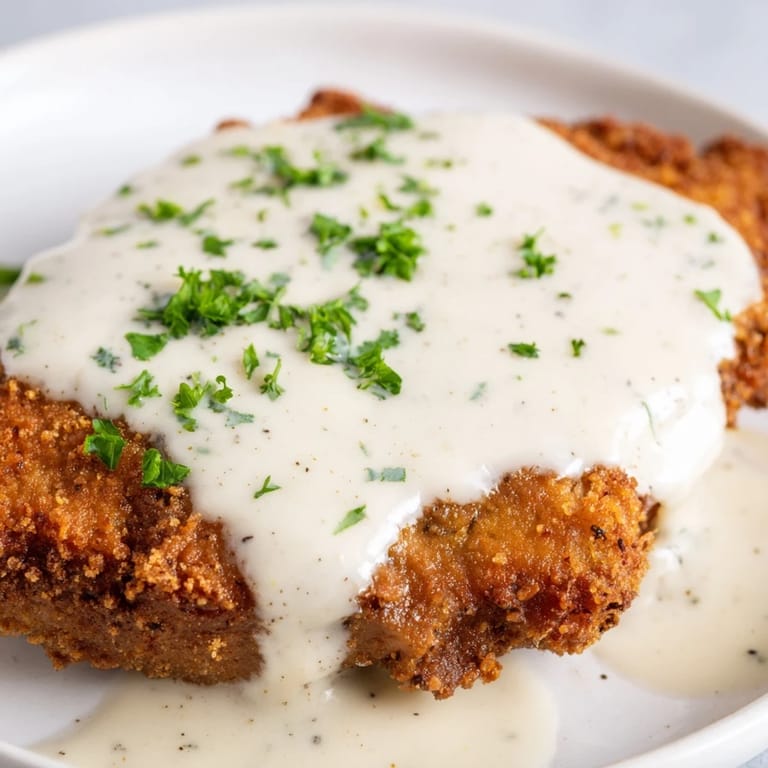
 My grandmother's kitchen smelled like cast iron and hot oil the first time she taught me to make chicken fried steak. She'd been making it for decades, and watching her pound those cube steaks with the flat of a meat mallet was like witnessing a ritual. The way she'd dredge each piece through flour, egg, and breadcrumbs with such practiced ease made it look almost musical. I was certain I'd mess it up, but she just smiled and said the secret was patience and confidence, two things I didn't think I had yet. By the time those golden steaks hit the plate swimming in creamy gravy, I understood why this dish had fed her family through everything.
I made this for a crowd once on a cold Sunday, and something unexpected happened—people actually came back for seconds of the gravy alone. My friend Marcus, who's always skeptical about home cooking, took one bite and got quiet in that way that means the food won the conversation. We ended up sitting around the table longer than planned, just enjoying how this simple dish brought everyone together. That's when I realized chicken fried steak isn't really about technique or ingredients; it's about showing up for people with something warm and real.
Ingredients
- Beef cube steaks (4, about 150–180 g each): These are already tenderized cuts, which saves you time and guarantees tender results, but don't skip patting them dry—moisture is the enemy of a good crust.
- All-purpose flour (1 cup / 125 g): The foundation of your breading, and mixing it with spices creates a flavor base that actually tastes intentional.
- Eggs (2 large) mixed with milk (1/2 cup / 120 ml): This egg wash is your glue; the milk stretches it and keeps it from drying out too fast as you dredge.
- Breadcrumbs (1 cup / 60 g): Use panko if you want extra crunch, or regular breadcrumbs if you prefer a more delicate crust—both work beautifully.
- Garlic powder, onion powder, paprika, cayenne pepper (1 tsp, 1 tsp, 1 tsp, 1/2 tsp): These seasonings live in the flour coating and build a savory depth that makes people ask for the recipe.
- Salt and black pepper (1 tsp and 1/2 tsp): Season generously in the flour mixture; the meat itself can take bold flavoring without tasting over-salted.
- Vegetable oil, for frying: You need enough to create that 1 cm depth in the pan—too little and you'll steam instead of fry, too much and it gets messy.
- Pan drippings or unsalted butter (3 tbsp for gravy): Save those browned bits from the steak; they're liquid gold for gravy flavor.
- Milk for gravy (2 cups / 480 ml): Whole milk makes the creamiest gravy, but you can use half-and-half if you want to feel fancy.
- Fresh parsley (2 tbsp, optional): A small shower of green at the end cuts through the richness and makes the plate actually look intentional.
Tired of Takeout? 🥡
Get 10 meals you can make faster than delivery arrives. Seriously.
One email. No spam. Unsubscribe anytime.
Instructions
- Prepare and dry your steaks:
- Pat each cube steak completely dry with paper towels—this step determines whether you get a crispy crust or a soggy one, so don't rush it. Moisture is the enemy of browning, and you want those steaks to sing.
- Set up your breading station:
- Arrange three shallow bowls in a line: seasoned flour in the first, beaten egg mixed with 1/2 cup milk in the second, and breadcrumbs in the third. This assembly-line setup keeps your hands from getting completely messy and makes the whole process feel organized.
- Coat each steak with breading:
- Take one steak and dredge it first through the seasoned flour, shaking off excess, then dip it into the egg wash, then press it gently into the breadcrumbs, making sure the crumbs stick everywhere. The pressing is what creates that wonderful texture, so don't be timid about it.
- Heat your oil to the right temperature:
- Pour vegetable oil into a large skillet to a depth of about 1 cm and heat it over medium-high heat until a tiny piece of breadcrumb sizzles immediately when dropped in. This tells you the oil is ready and won't absorb into your steak like a sponge.
- Fry the steaks until golden and crisp:
- Carefully lay each steak in the hot oil and cook for 3–4 minutes on the first side, listening for that satisfying sizzle and watching for the edges to turn golden brown. Flip gently with tongs and cook the second side for another 3–4 minutes until both sides are the color of honey in sunlight.
- Rest the fried steaks:
- Transfer each finished steak to a paper towel-lined plate and keep them warm while you finish the rest; this drains excess oil and keeps them crispy.
- Make the gravy in the same skillet:
- Pour off all but 3 tablespoons of the oil, leaving behind all those brown, flavorful bits stuck to the bottom. Add 3 tablespoons of flour and whisk constantly over medium heat for about a minute until it's golden and smells nutty, not raw.
- Create the creamy gravy:
- Gradually pour in 2 cups of milk while whisking steadily to avoid lumps, and scrape up every brown bit with your whisk—those are pure flavor. Keep whisking as it thickens, about 3–5 minutes, until it coats the back of a spoon and flows like silk.
- Season and serve:
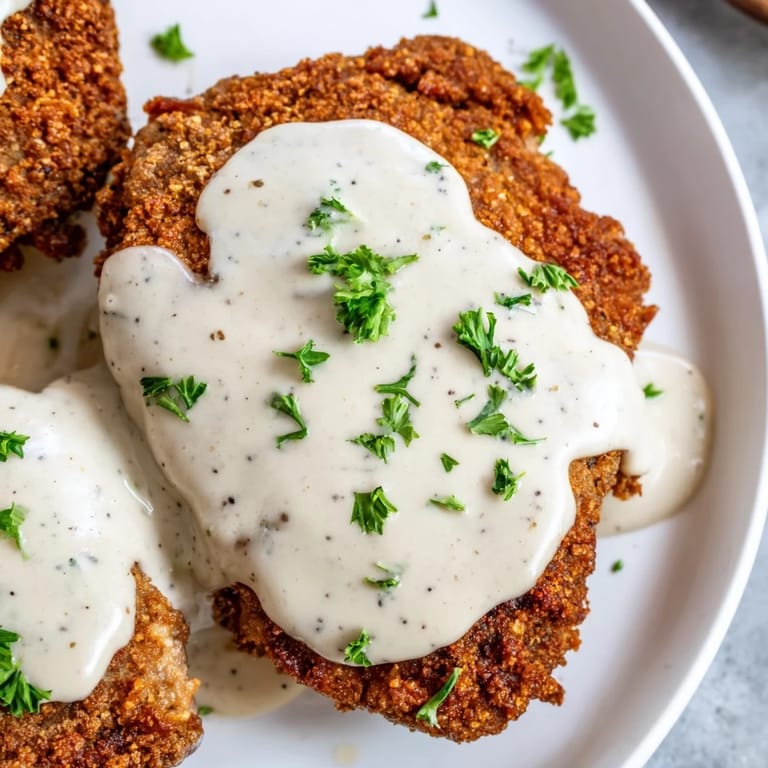
- Taste the gravy and adjust salt and pepper to your preference, then pour it generously over each hot steak and finish with a sprinkle of fresh parsley if you have it.
 Save to Pinterest
 There's a moment right when the first steak hits the gravy, steam rising, the smell filling the whole kitchen, when you realize you've made something genuinely comforting. That's the moment this dish stops being a recipe and becomes proof that the simplest food, made with attention and care, is what people actually remember.
The Science Behind the Crust
The reason the triple-dredge method works so well is that each layer serves a purpose. The seasoned flour sticks to the moisture on the meat and creates a base layer. The egg wash acts as an adhesive that keeps everything locked together and fries to a light golden color. The breadcrumbs add texture and create that satisfying crunch that makes people light up when they take a bite. When these three layers hit hot oil, they fry at different rates, creating a crust that's crispy on the outside but doesn't toughen the meat underneath. It's physics meeting comfort food, and understanding why it works makes you feel like you're doing it intentionally instead of just following steps.
Timing and Temperature Matter More Than You Think
The oil temperature is genuinely the most important variable in this entire recipe. If it's too cool, the coating absorbs oil and becomes greasy instead of crispy. If it's too hot, the outside browns before the inside cooks through, leaving you with a dark crust and meat that's still tough. Medium-high heat gives you that sweet spot where the outside crisps in 3–4 minutes while the inside stays tender. I learned this the hard way by rushing and turning up the heat too high, creating a steak that looked perfect but tasted like it had been beaten with a hammer. Now I use a simple test: drop a breadcrumb in the oil, and if it sizzles immediately and dances around, you're ready.
Making It Your Own
This is the kind of recipe that actually invites personalization without losing its soul. Some people add a touch of smoked paprika to the flour for a subtle depth, others mix cayenne into the breadcrumbs for a hint of heat that sneaks up on you. The gravy is especially forgiving—a pinch of smoked paprika, a small shake of hot sauce, or even a handful of crispy bacon crumbles turn it into something that feels brand new.
- Try adding a beaten egg yolk to the gravy after you finish cooking it for an even richer, almost custard-like texture that feels luxurious.
- Save the oil drippings from the meat and use them instead of butter for the gravy; they carry more flavor than plain oil and taste more intentional.
- Serve with something acidic on the side—pickled vegetables, a simple salad, or even just a squeeze of lemon—to cut through the richness and balance the plate.
 Save to Pinterest
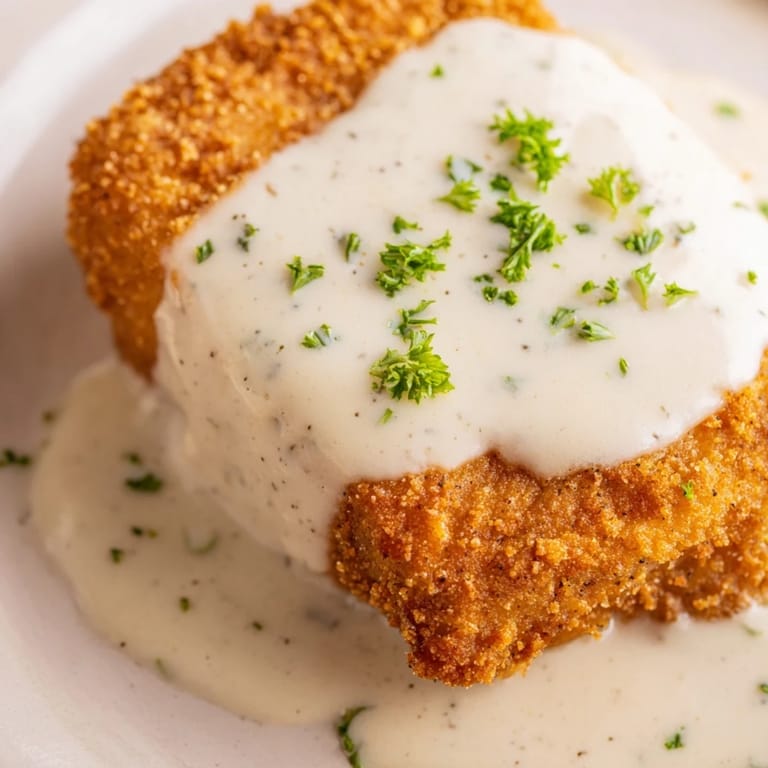
 Chicken fried steak is proof that the best meals don't need to be complicated; they just need to be made with attention. Bring it to the table hot, pour the gravy generously, and watch people remember why simple, honest food is actually the most satisfying.
Recipe FAQs
- → How do I achieve a crispy crust on the fried steak?
Ensure steaks are dried thoroughly before breading. Use a three-step coating with seasoned flour, egg wash, and breadcrumbs. Fry in hot oil without overcrowding for even crispiness.
- → Can I use an alternative to vegetable oil for frying?
Yes, oils with high smoke points like canola or peanut oil work well to achieve a golden crust without burning.
- → What is the best way to make the creamy gravy silky smooth?
Whisk continuously when adding milk to the pan drippings and flour mixture to prevent lumps and create a smooth, thickened sauce.
- → Can I prepare the dish ahead of time?
You can bread the steaks earlier and refrigerate them before frying. Prepare gravy just before serving for optimal texture and flavor.
- → How can I adjust seasoning for a milder flavor?
Reduce or omit cayenne pepper and adjust salt amounts in both breading and gravy to taste.
- → What side dishes complement this fried steak best?
Classic sides include creamy mashed potatoes, steamed green beans, or a fresh garden salad to balance richness.