 Save to Pinterest
 One Wednesday afternoon, I stood in my kitchen with a handful of spinach that was starting to wilt and a wedge of feta I'd picked up on impulse at the market. I wasn't in the mood for anything fussy, so I tossed together some quinoa, sautéed the greens until they softened into something silky, and scattered everything over the warm grains. That simple bowl turned into my go-to lunch for weeks, and I've been refining it ever since.
My roommate knocked on my bedroom door one Saturday morning, drawn by the smell of lemon and garlic coming from the kitchen. When I handed her a bowl still warm from the skillet, she sat down right there on the counter and finished it without saying much. She came back the next day asking if I'd make it again, and that's when I knew this bowl had staying power.
Ingredients
- Quinoa or brown rice: Either grain works beautifully here; quinoa cooks faster and has a slightly nutty bite, while brown rice brings earthier flavor and a chewier texture that some people prefer.
- Fresh spinach: Buy it washed if you're short on time, and roughly chop it before sautéing so it wilts more evenly and releases its moisture.
- Cherry tomatoes: Halving them by hand instead of using a knife helps preserve their juices and makes them less likely to become mushy.
- Cucumber: A crisp, cool element that contrasts nicely with the warm components; dice it just before assembling so it stays fresh and crunchy.
- Red bell pepper: Adds sweetness and crunch, and the color looks stunning against the other ingredients.
- Red onion: Thinly slice it and don't skip this; the sharpness cuts through the richness of the feta beautifully.
- Feta cheese: Crumble it by hand right before serving so the pieces stay intact and don't get compressed into clumps.
- Extra-virgin olive oil: Use the good stuff here since you'll taste it directly in the dressing and drizzled over the finished bowl.
- Fresh lemon juice: Freshly squeezed makes an enormous difference; bottled juice tastes flat by comparison.
- Honey or maple syrup: A tiny touch of sweetness balances the acidity and brings the flavors into focus.
- Garlic: Mince it finely so it distributes evenly through the dressing rather than biting you in isolated places.
- Toasted pine nuts or sunflower seeds: These are optional but they add a textural element that transforms the bowl from good to something you'll crave.
Tired of Takeout? 🥡
Get 10 meals you can make faster than delivery arrives. Seriously.
One email. No spam. Unsubscribe anytime.
Instructions
- Bring your grains to life:
- Pour the vegetable broth into a medium saucepan and bring it to a rolling boil, then stir in your chosen grain. The liquid should smell clean and savory as it rises. Lower the heat, cover the pan, and let it simmer undisturbed until the liquid disappears and the grains are tender to your bite—about 15 minutes for quinoa, or 35 for brown rice.
- Wilt the spinach gently:
- Heat a tablespoon of olive oil in a large skillet over medium heat and listen for the gentle sizzle. Add your chopped spinach and toss it around for just 2 to 3 minutes until it transforms from bright green to dark and silky, then immediately remove it from the heat so it doesn't overcook.
- Build your dressing:
- Whisk together the remaining olive oil, fresh lemon juice, honey, and minced garlic in a small bowl until emulsified and glossy. Taste it and adjust the salt and pepper until it feels bright and balanced on your tongue.
- Assemble with intention:
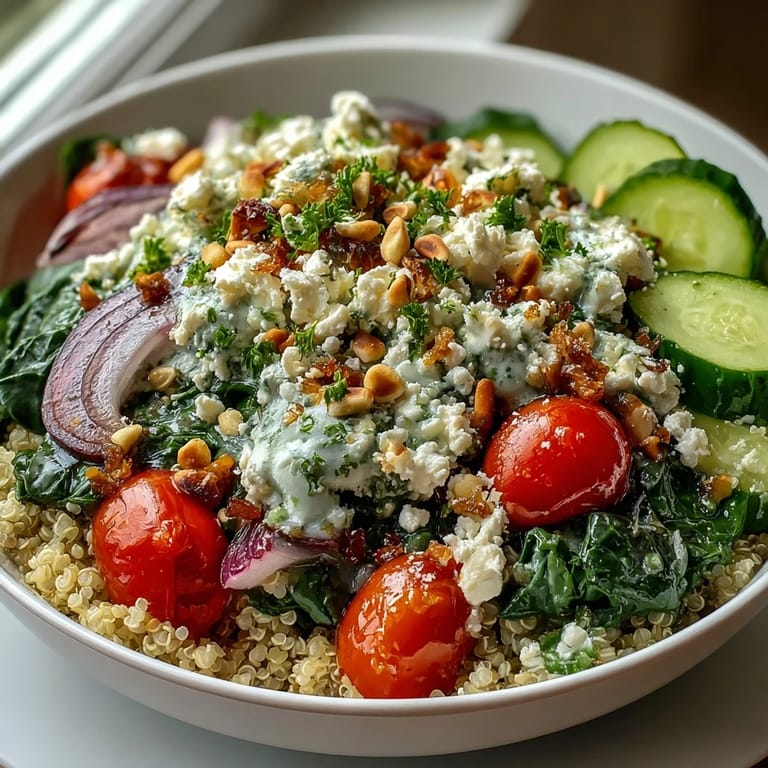
- Divide the warm grains evenly among four bowls, creating a bed for everything else. Layer the sautéed spinach on top, then scatter the tomatoes, cucumber, bell pepper, and red onion across each bowl so every spoonful will have something different.
- Crown with feta:
- Sprinkle the crumbled feta cheese evenly over each bowl right before serving, so it stays distinct and creamy rather than warming into the grains.
- Dress and finish:
- Drizzle each bowl generously with the dressing, then finish with a scatter of toasted nuts and fresh parsley if you have them on hand. Serve it immediately while the grains are still warm and everything is at its best.
 Save to Pinterest
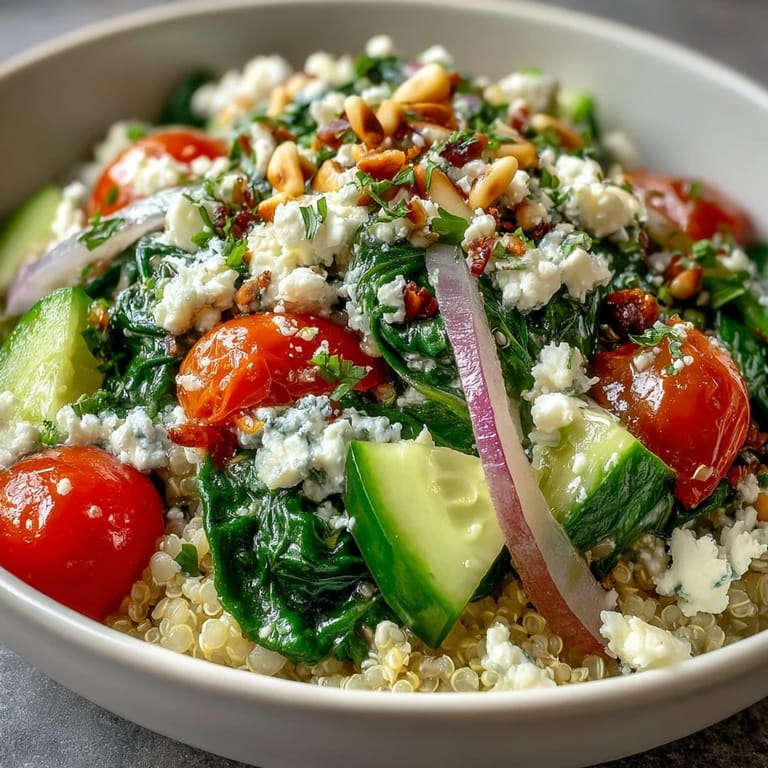
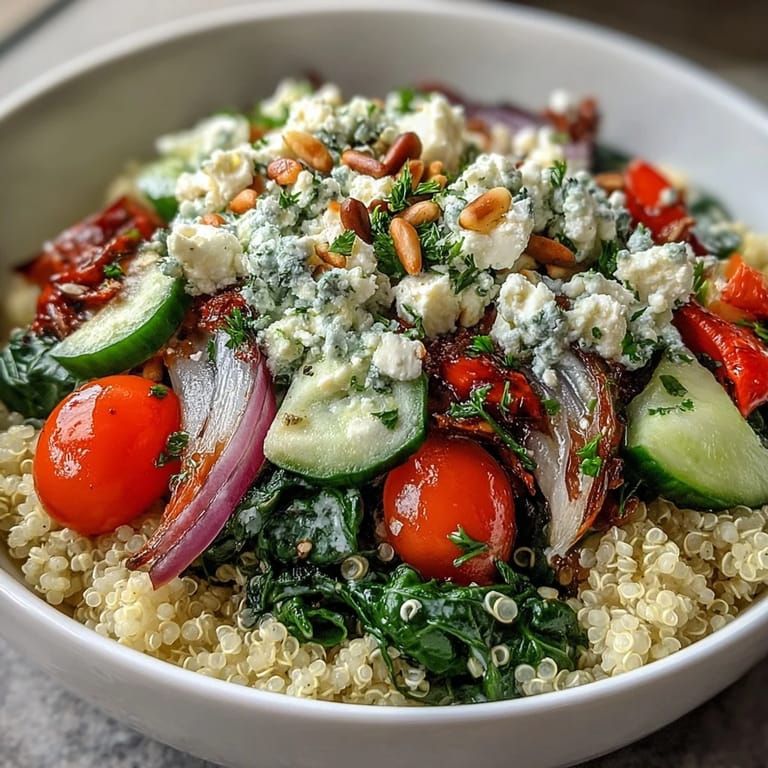
 There's something almost meditative about arranging all those colors into a bowl—the green spinach, the red tomatoes, the orange bell pepper, the white feta scattered across like little clouds. My sister took a photo of one before eating it, which tells you everything about how this bowl makes you want to slow down and actually appreciate what you're eating.
Why Warm Grains Matter
I used to cook my grains ahead of time and chill them, thinking that was efficient. But serving them still warm changes everything—they stay tender rather than hardening up, and they hold the dressing better so every bite is actually flavorful instead of bland. The warmth also brings out the subtle nuttiness of the grain itself, which gets lost once everything cools down.
The Feta Crumble Factor
One evening I made the mistake of crumbling the feta too early and storing it in the fridge, thinking I was getting ahead. By the time I assembled the bowl, the pieces had compressed into a dense, uniform texture that was forgettable. Now I crumble it fresh, right over the top, so it stays creamy and distinct with actual structure.
Building Flavor Through Layers
This bowl works because every element has its own job—the grains provide substance, the wilted spinach brings earthiness, the raw vegetables give you snap and freshness, and the feta adds creaminess and salt. Nothing overwhelms anything else; instead, they create this conversation of flavors where you notice something different with every spoonful.
- The dressing is the thread connecting everything together, so don't be shy with how much you use.
- If you're prepping this for the week, store the dressing separately and add it only when you're ready to eat.
- Taste as you go and adjust the lemon, salt, or garlic to match your mood that day.
 Save to Pinterest
 This bowl became my answer to "what's for lunch?" because it's flexible enough to work with whatever vegetables I have around, but structured enough that it always feels intentional and nourishing. Some days I eat it warm right off the stove, other days I pack it cold for work, and it's delicious either way.
Recipe FAQs
- → Can I make this grain bowl ahead of time?
Yes, this bowl meal preps beautifully. Cook the quinoa and vegetables up to 4 days in advance. Store components separately in airtight containers and assemble when ready to serve. The dressing can be made ahead and kept refrigerated for up to a week.
- → What other grains work well in this bowl?
Farro, bulgur, couscous, or wild rice make excellent substitutes for quinoa. Adjust cooking times accordingly—farro and wild rice take longer, while couscous cooks in just 5 minutes. Each grain brings its unique texture and nutritional profile to the dish.
- → How can I add more protein to this bowl?
Cooked chickpeas, lentils, or cannellini beans naturally complement the Mediterranean flavors. Grilled chicken strips, baked tofu, or a poached egg also work well. For plant-based options without dairy, consider extra legumes or hemp seeds.
- → Can I use different greens instead of spinach?
Arugula adds peppery notes, baby kale offers more robust nutrition, and Swiss chard brings earthy sweetness. For raw preparations, try mixed greens or fresh herbs. Adjust cooking time based on the green's tenderness—hearty greens may need an extra minute or two.
- → Is this bowl served warm or cold?
Enjoy it either way! The grains and spinach are delicious warm, while fresh vegetables provide refreshing contrast. For room temperature service, let the cooked components cool slightly before assembling. This versatility makes it ideal for packed lunches or quick dinners.
- → How long does the dressing keep?
The lemon-garlic dressing stays fresh in the refrigerator for 5-7 days when stored in a sealed jar. The olive oil may solidify when cold—simply let it sit at room temperature for 10 minutes and shake well before using.