 Save to Pinterest
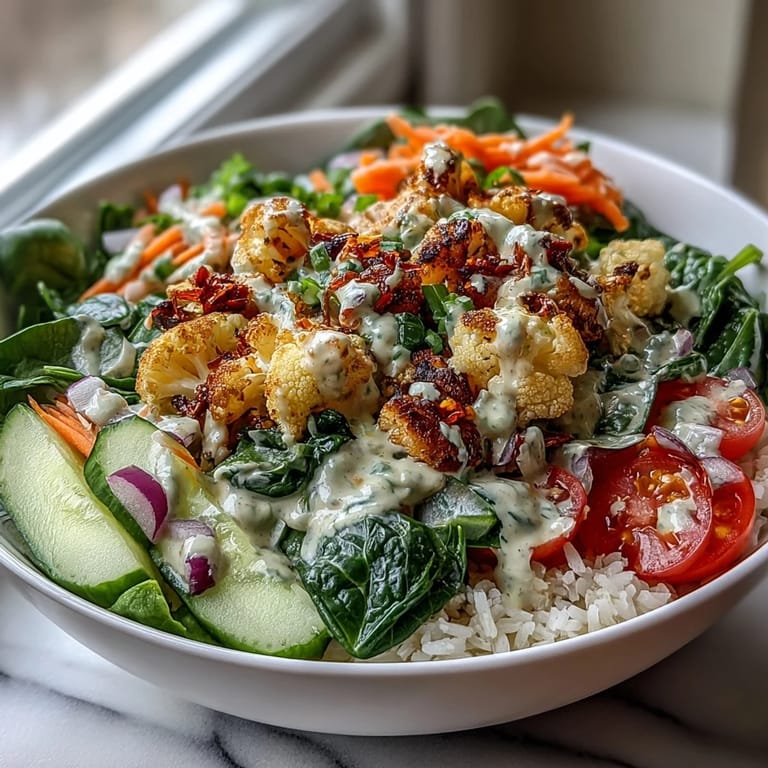
 There was a Tuesday when my roommate came home exhausted from work and stood in front of our nearly empty fridge with that defeated look I knew too well. I had just bought a head of cauliflower on impulse, some rice, and was experimenting with a tahini sauce I'd been meaning to master. Within an hour, we were sitting on our kitchen counter with bowls that looked restaurant-worthy, and she asked if I could make it again next week. That's when I knew this bowl had quietly become one of those dishes that feels both nourishing and celebratory at once.
I made this for my sister's book club last spring, and someone asked for the recipe before dessert was even served. The funny part was watching people who claimed they didn't really like vegetables go back for seconds of the cauliflower alone. That moment taught me that good seasoning and proper roasting temperatures matter more than any fancy technique ever could.
Ingredients
- Large head cauliflower, cut into florets: Aim for pieces about the size of a golf ball so they caramelize properly without drying out.
- Olive oil (2 tbsp for cauliflower, 1 tbsp for sauce): This is where flavor starts, so use something you actually like the taste of.
- Dried oregano and thyme (1 tsp each): These herbs create that herbaceous backbone that makes people ask what your secret is.
- Smoked paprika and garlic powder (1/2 tsp each): The smoked paprika is what gives the cauliflower that almost savory, restaurant-kitchen depth.
- Salt and pepper: Season in layers rather than all at once, and taste as you go because seasoning is personal.
- Basmati or jasmine rice (1 cup): Basmati stays separate and fluffy, which matters when you're building a bowl with multiple textures.
- Water and salt for rice (2 cups water, 1/2 tsp salt): The salt in the cooking water seasons the rice from the inside out rather than just sitting on top.
- Cherry tomatoes, cucumber, carrots, red onion, and spinach: Buy what looks good at your market; these can vary based on season and what calls to you.
- Tahini (1/4 cup): This is your sauce's backbone, so make sure it's not rancid by giving it a smell test when you open the jar.
- Lemon juice (2 tbsp): Fresh is crucial here because bottled juice tastes tinny and throws off the whole balance.
- Maple syrup or honey (1 tsp): Just enough to round out the tartness and add a whisper of sweetness that no one should be able to identify.
Tired of Takeout? 🥡
Get 10 meals you can make faster than delivery arrives. Seriously.
One email. No spam. Unsubscribe anytime.
Instructions
- Fire up the oven and prep your workspace:
- Set your oven to 425°F and line a baking sheet with parchment paper so cleanup becomes almost enjoyable. Having everything ready before you start makes the whole process feel calm instead of frantic.
- Season the cauliflower like you mean it:
- Toss your florets with olive oil, oregano, thyme, smoked paprika, garlic powder, salt, and pepper in a large bowl until every piece is coated. This step takes two minutes but changes everything about the final result.
- Spread and roast until golden:
- Lay the cauliflower on your prepared sheet in a single layer and roast for 25 to 30 minutes, tossing halfway through. You'll know it's ready when the edges turn golden brown and some pieces are almost caramelized, which is when the magic actually happens.
- Get your rice going alongside:
- While the cauliflower roasts, combine rice, water, and salt in a saucepan and bring to a boil. Once it boils, lower the heat, cover it, and let it simmer undisturbed for 15 minutes, then fluff it with a fork and let it sit covered for a minute.
- Whisk together the tahini sauce:
- In a bowl, combine tahini, lemon juice, water, olive oil, maple syrup, garlic powder, salt, and pepper and whisk until it's smooth and creamy. If it's too thick, add water a tablespoon at a time until it reaches that pourable but coating consistency.
- Prep your vegetables with intention:
- Halve the cherry tomatoes, dice the cucumber, shred the carrots, thinly slice the red onion, and wash your greens. Cutting everything into roughly similar sizes makes the bowl feel intentional rather than like you just threw things together.
- Assemble each bowl like you're building something that matters:
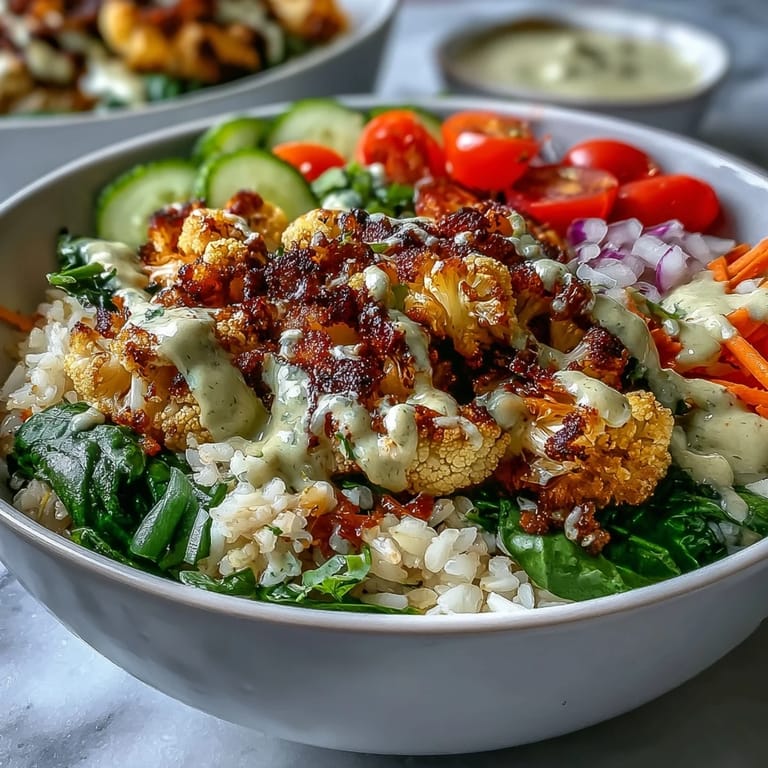
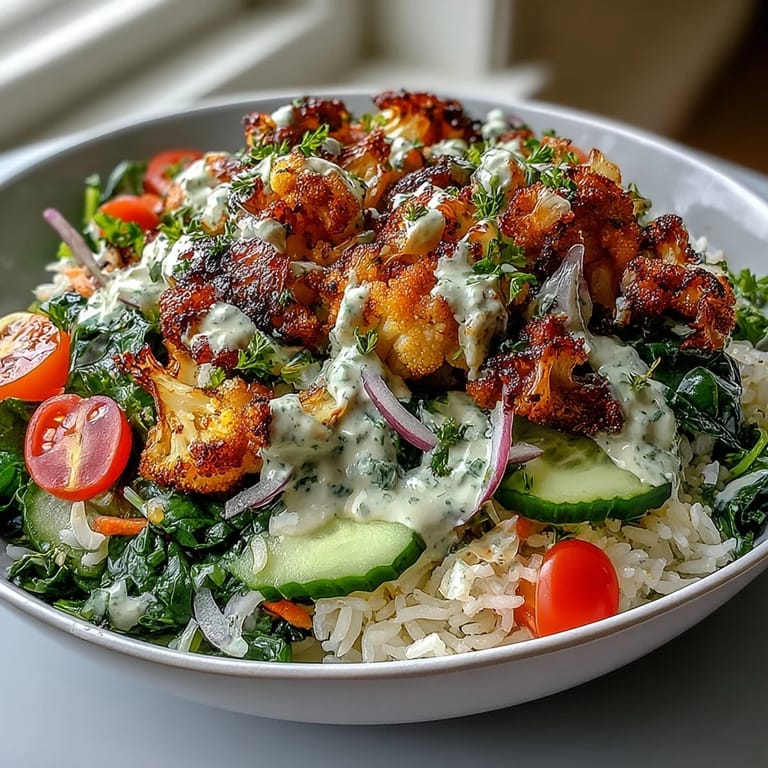
- Start with a base of rice in each bowl, then layer on the spinach or greens, followed by the roasted cauliflower, tomatoes, cucumber, carrots, and red onion. Drizzle generously with tahini sauce and serve right away before everything cools down.
 Save to Pinterest
 There's something almost meditative about sitting down with a bowl that has eight different colors and textures in it, knowing you made every component yourself. It became my go-to meal when I needed to feel grounded, and it still is.
Why This Bowl Became a Regular
The first time I made this, I wasn't trying to impress anyone or stick to some diet plan. I was just hungry at 6 PM with limited options, and somehow this came together looking like something I'd order from a place with exposed brick and a cool lighting design. The fact that it's actually simple enough to make on a Tuesday while answering emails is the part that made it stick around permanently.
Playing With What You Have
One rainy afternoon I realized I didn't have spinach but I did have kale, and the whole bowl took on this deeper, earthier tone that I actually preferred. The beauty of this formula is that it's more of a framework than a rigid set of rules, so feel free to swap vegetables based on what's in season or what you're craving that particular day.
The Tahini Sauce Is Where the Real Story Lives
I spent way longer than I should have learning that tahini sauce is basically an emulsion, and that treating it like one actually matters. Once I understood that lemon juice and water are basically the acid and thinning agents that keep tahini from being a thick paste, everything got easier and better tasting. The maple syrup or honey isn't sweetness for sweetness's sake; it's the ingredient that reminds your palate that balance exists.
- Make the sauce first if you're serving it warm, or prepare it up to three days ahead and keep it covered in the refrigerator.
- If the sauce separates during storage, just whisk it back together or add a splash of warm water.
- Taste the sauce before you drizzle it because every lemon and every batch of tahini is slightly different.
 Save to Pinterest
 This bowl has become my answer to the question of what to make when you want something that feels both easy and intentional. Make it once and it'll probably become something you come back to over and over.
Recipe FAQs
- → Can I make this ahead of time?
Yes, roast the cauliflower and cook the rice up to 3 days ahead. Store components separately in the refrigerator. Assemble bowls fresh and add tahini sauce just before serving for best texture.
- → What other grains work well?
Quinoa, brown rice, farro, or couscous make excellent substitutes. Adjust cooking time accordingly. Each grain brings slightly different texture and nutritional profile to the bowl.
- → How can I add more protein?
Chickpeas, grilled tofu, roasted chickpeas, or a poached egg complement beautifully. Feta cheese adds protein plus Mediterranean flair. Lentils also work wonderfully mixed into the rice.
- → Can I roast other vegetables with the cauliflower?
Absolutely. Bell peppers, broccoli florets, sweet potato cubes, or Brussels sprouts roast beautifully alongside cauliflower. Cut pieces uniformly for even cooking times.
- → Is the tahini sauce adjustable?
Yes, add more water for thinner consistency or less for thicker dressing. Increase lemon for brightness, maple syrup for sweetness, or add a pinch of cumin for extra depth.
- → What seasonal substitutions work?
Swap cucumber for roasted zucchini in winter, or add fresh herbs like parsley or cilantro. Spring onions work instead of red onion. Adjust vegetables based on what's fresh and available.