 Save to Pinterest
 My neighbor Maria once appeared at my door with a covered dish, steam curling from under the foil, and said only, "You need to learn this." Inside were these tightly rolled bundles swimming in tomato sauce, the smell so rich it made my kitchen feel small. She stayed long enough to watch me take the first bite, then left with a knowing smile. I've been making braciole ever since, each time remembering that unexpected lesson in generosity. It's the kind of dish that refuses to be rushed, which is exactly why it matters.
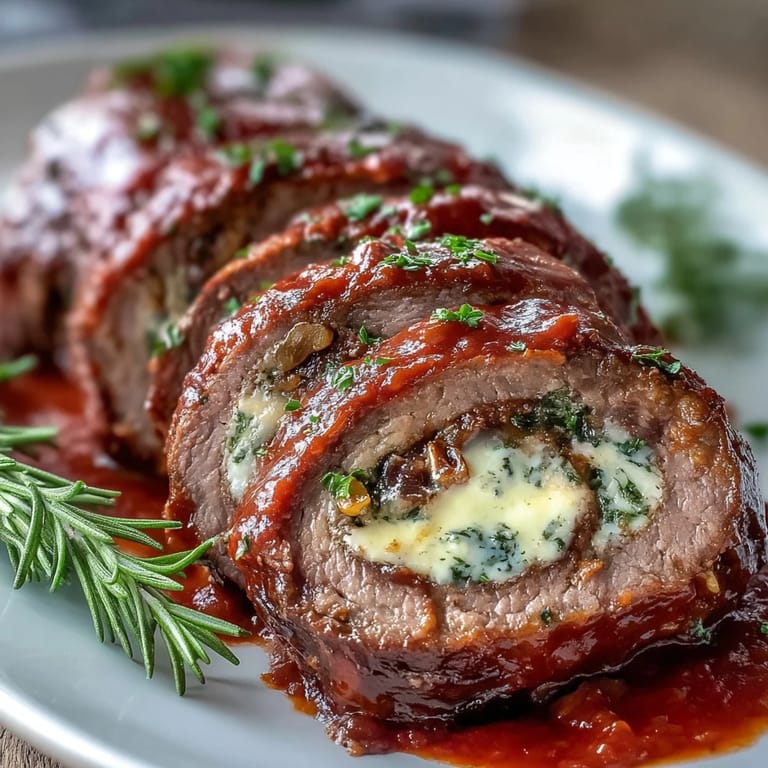
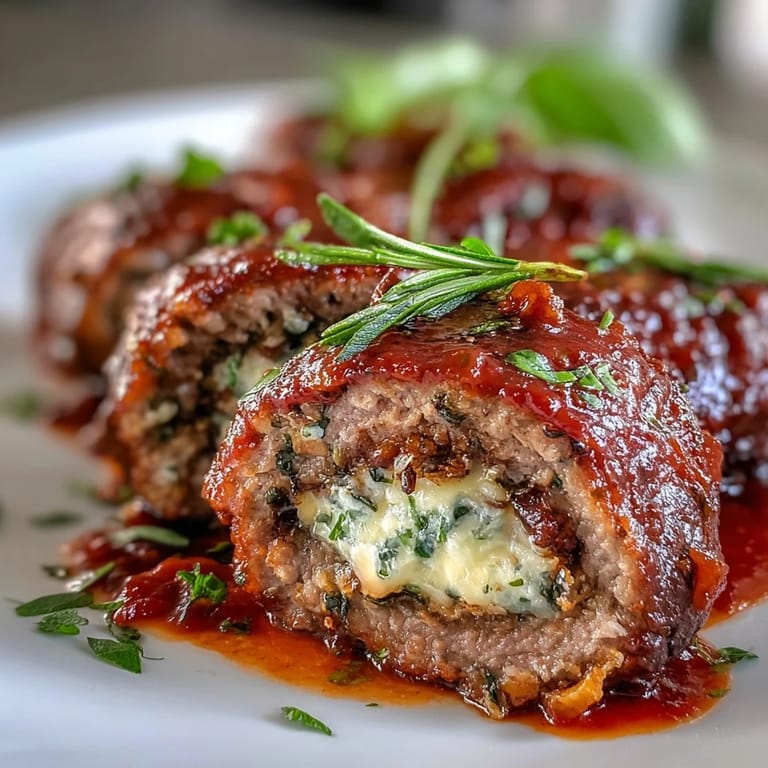
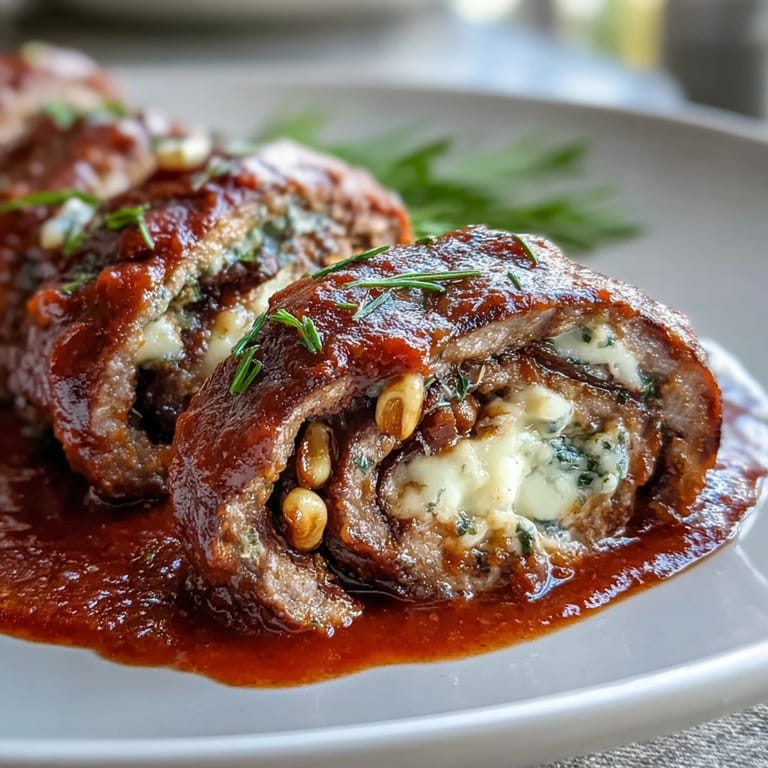
I made this for a dinner party once, and the room went quiet when I brought the platter out. Someone asked if I'd been hiding my Sicilian roots, which I hadn't, but the question felt like a compliment. The rolls sliced cleanly, revealing spirals of cheese and pine nuts, and the sauce clung to everything in the best possible way. One guest scraped his plate so thoroughly I thought he might lick it. That night taught me that some recipes earn their place at the table not through complexity, but through honest, layered flavor.
Ingredients
- Beef top round or flank steak: Thin slices are essential here, ask your butcher to cut them for you if pounding meat feels like unnecessary violence, and choose cuts with a little marbling for tenderness.
- Pecorino cheese: Its sharp, salty bite balances the sweetness of raisins better than any other cheese I've tried, and it doesn't turn greasy when it melts.
- Pine nuts: Toasting them first in a dry pan releases an almost buttery fragrance that makes the filling taste expensive, just watch them closely because they burn in seconds.
- Raisins: They add pockets of sweetness that surprise you mid-bite, and if you soak them in warm water for ten minutes first, they plump up beautifully.
- Fresh parsley and basil: The herbs keep the filling from feeling too heavy, and their brightness cuts through the richness of the cheese and meat.
- Garlic: Minced fine so it disperses evenly, it adds warmth without overpowering the delicate balance of sweet and savory.
- Breadcrumbs: They bind the filling and soak up any juices, preventing the rolls from getting soggy, and a handful of panko works if that's what you have.
- Crushed tomatoes: San Marzano tomatoes are worth the extra dollar, their sweetness and low acidity make the sauce taste like it simmered all day even when it hasn't.
- Dry red wine: It deglazes the pan and adds depth, but if you skip it, a splash of balsamic vinegar does something similar.
- Dried oregano: A little goes a long way, and it ties the sauce to every Italian meal you've ever loved without trying too hard.
Tired of Takeout? 🥡
Get 10 meals you can make faster than delivery arrives. Seriously.
One email. No spam. Unsubscribe anytime.
Instructions
- Prepare the beef:
- Lay each slice flat on your cutting board and pound gently with a meat mallet until it's about a quarter-inch thick, working from the center outward to avoid tearing. Season both sides with salt and pepper, being generous because the filling is sweet and needs that contrast.
- Make the filling:
- In a medium bowl, toss together the pecorino, toasted pine nuts, raisins, parsley, basil, garlic, and breadcrumbs until everything is evenly distributed. The mixture should look chunky and smell like a Sicilian pantry.
- Roll the braciole:
- Spoon a quarter of the filling onto each beef slice, spreading it almost to the edges but leaving a small border so it doesn't spill out. Roll tightly from one short end to the other, tucking in the sides as you go, then secure with kitchen twine or a few toothpicks.
- Sear the rolls:
- Heat olive oil in a large skillet over medium-high heat until it shimmers, then add the braciole and sear on all sides until deeply browned, about six to eight minutes total. Don't rush this step, the caramelization adds flavor the sauce can't replicate.
- Build the sauce:
- In the same skillet, add a bit more olive oil and sauté the chopped onion until soft and translucent, then stir in the garlic and cook just until fragrant. Pour in the red wine if using, scraping up all the browned bits stuck to the bottom of the pan.
- Simmer everything together:
- Add the crushed tomatoes, oregano, salt, pepper, and a pinch of sugar if your tomatoes taste sharp, then bring the sauce to a gentle simmer. Nestle the seared braciole back into the sauce, cover the skillet, and let everything cook over low heat for about an hour and fifteen minutes, turning the rolls occasionally so they braise evenly.
- Finish and serve:
- When the beef is fork-tender and the sauce has thickened, remove the braciole and carefully cut away the twine or pull out the toothpicks. Slice each roll into thick rounds and arrange them on a platter, spooning the sauce generously over the top.
 Save to Pinterest
 I once served this to a friend who'd just moved from Palermo, and I braced myself for polite criticism. Instead, she closed her eyes after the first bite and said it reminded her of her aunt's Sunday table. We sat in silence for a moment, both understanding that food can be a kind of time travel. That's when I realized braciole isn't just a recipe, it's a way of honoring the people who taught us that cooking is love made visible.
What to Serve Alongside
The sauce is too good to waste, so serve this over a mound of rigatoni or penne that can catch every bit of it in their ridges. Polenta works beautifully too, its creamy blandness a perfect backdrop for the bold flavors. If you want to keep it simple, just tear apart a loaf of crusty bread and let people mop their plates. A crisp green salad with lemon and olive oil cuts through the richness, and a glass of Nero d'Avola ties the whole meal together.
How to Store and Reheat
Braciole keeps well in the fridge for up to three days, stored in an airtight container with the sauce spooned over the sliced rolls to keep them moist. When you reheat it, do so gently in a covered skillet over low heat, adding a splash of water or broth if the sauce has thickened too much. I've frozen these successfully too, though the texture of the beef softens slightly, it's still deeply satisfying. Let them thaw overnight in the fridge before reheating, and resist the urge to microwave them because the edges will turn rubbery.
Little Tweaks That Make a Difference
Some cooks tuck a wedge of hard-boiled egg into the filling, which adds richness and a pop of yellow when you slice the rolls. A few thin strips of prosciutto layered on the beef before you add the filling will deepen the savory notes. If you want extra sweetness, swap half the raisins for chopped dried apricots, which also add a slight tang.
- Toast the pine nuts in a dry pan until they smell nutty and turn golden, it only takes two minutes but changes everything.
- If the sauce tastes too acidic, a pinch of sugar or a grated carrot simmered in the sauce will mellow it out.
- Don't skip the wine deglazing step, those caramelized bits stuck to the pan are pure flavor.
 Save to Pinterest
 This dish asks for patience, but it gives back tenfold in flavor and the quiet satisfaction of making something real. Every time I tie up those little bundles, I think of Maria and her unannounced lesson, and I hope someone else will someday feel the same way about a recipe I shared.
Recipe FAQs
- → Can I use a different cut of beef for braciole?
Yes, you can use flank steak, sirloin tip, or round steak. The key is to choose a lean cut that can be pounded thin and will become tender with slow braising.
- → How do I prevent the braciole from falling apart during cooking?
Secure the rolls tightly with kitchen twine or toothpicks, making sure to tuck in the sides before rolling. Sear them gently to set the shape before simmering.
- → Can I make braciole ahead of time?
Absolutely. You can assemble the rolls up to a day ahead and refrigerate them. You can also cook them completely and reheat gently in the sauce before serving.
- → What can I substitute for pine nuts if I have a nut allergy?
Omit the pine nuts entirely or replace them with toasted breadcrumbs for added texture. You can also use sunflower seeds if they fit your dietary needs.
- → What should I serve with Sicilian braciole?
Braciole pairs wonderfully with pasta tossed in the tomato sauce, creamy polenta, or crusty Italian bread. A side of sautéed greens or roasted vegetables complements the dish nicely.
- → Can I cook braciole in the oven instead of on the stovetop?
Yes, after searing and preparing the sauce, transfer everything to a covered Dutch oven and braise at 325°F (165°C) for about 1.5 hours until the beef is tender.