 Save to Pinterest
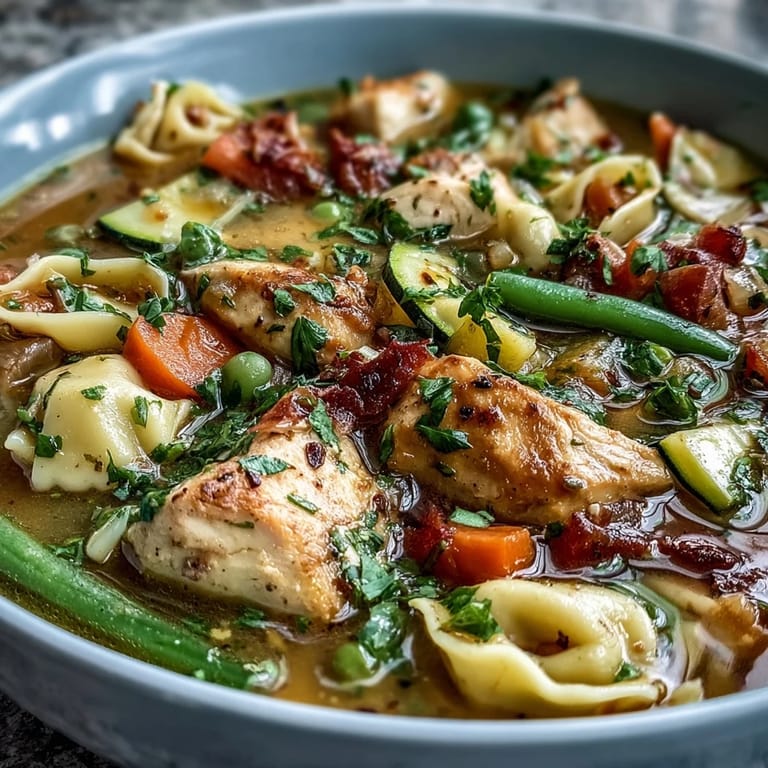
 The first time I made this soup was during a particularly brutal February when my apartment felt like it was never going to be warm again. My roommate had come down with a terrible cold and I needed something that could actually make her feel better. I threw together whatever I had in the fridge—chicken from the night before, vegetables that were starting to wilt, pasta from the back of the cupboard. The smell of thyme and simmering broth filled every corner of our tiny kitchen, and I remember her emerging from her room with red-rimmed eyes, saying, "Whatever that is, I need it now." We sat on the couch with steaming bowls, watching snow pile up against the windows, and for the first time all week, everything felt okay.
Last winter my sister came over unexpectedly after a terrible day at work. She walked in while the soup was simmering—the house already smelling like garlic and thyme and everything good—and without saying a word, she dropped her bag on the floor and went straight to the drawer where we keep the soup spoons. We ate standing up at the counter, steam fogging up her glasses, while she told me about her boss. By the time she reached the bottom of her bowl, she was laughing instead of crying. This soup has become our go-to therapy session ever since.
Ingredients
- Boneless chicken breasts: Cutting them into small cubes means they cook quickly and stay tender throughout the simmering process
- Carrots and celery: These form the classic soup foundation and provide that comforting sweetness we all crave
- Onion and garlic: Do not rush this step—taking the time to properly sauté them builds the deep flavor base that makes soup taste homemade
- Zucchini and green beans: They hold their shape beautifully and add fresh color to every bowl
- Small pasta shapes: Ditalini or elbows work perfectly because they are small enough to fit on a spoon but substantial enough to make the soup feel filling
- Chicken broth: Low-sodium gives you control over the final seasoning and prevents the soup from becoming too salty as it reduces
- Frozen peas: Add these at the very end so they stay bright green and sweet not mushy
- Fresh herbs: Dried herbs work for the long simmer but that final handful of fresh parsley makes everything taste alive
Tired of Takeout? 🥡
Get 10 meals you can make faster than delivery arrives. Seriously.
One email. No spam. Unsubscribe anytime.
Instructions
- Build your flavor foundation:
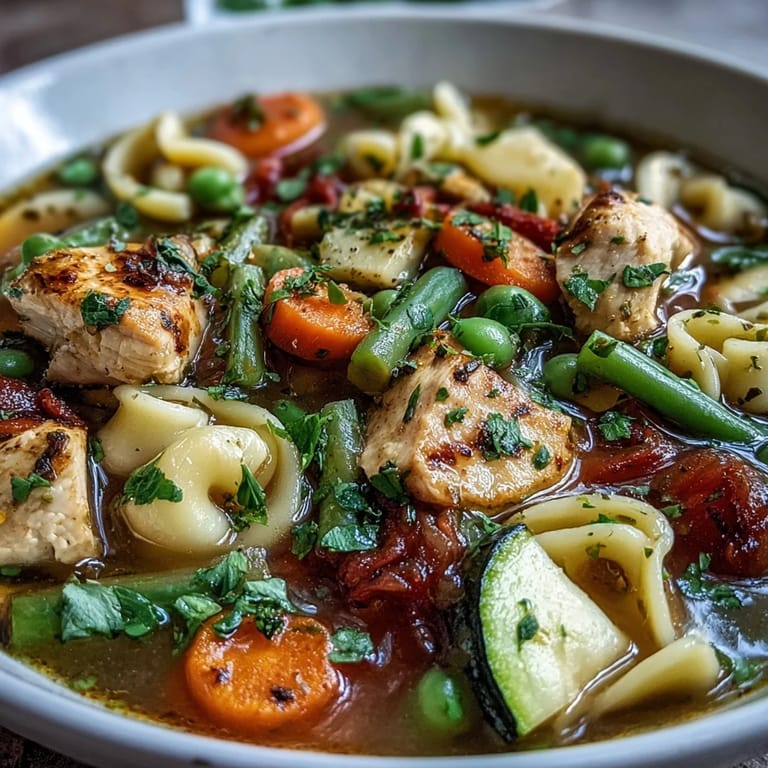
- Heat the olive oil in your largest soup pot over medium heat then add onion carrots and celery. Cook them for about 5 minutes until they soften and the onion turns translucent—your kitchen should start smelling amazing right about now.
- Add the aromatic base:
- Stir in the minced garlic and let it cook for just one minute until fragrant. Watch carefully because garlic can turn bitter if it browns too much.
- Sear the chicken:
- Add the cubed chicken and cook for 4 to 5 minutes stirring occasionally until lightly browned on the outside. The chicken does not need to be cooked through at this point since it will finish cooking in the broth.
- Add the vegetables and seasonings:
- Stir in zucchini green beans diced tomatoes with their juices thyme basil bay leaf salt and pepper. Everything should be smelling incredibly aromatic by now.
- Simmer the base:
- Pour in the chicken broth and bring everything to a boil. Reduce the heat cover the pot and let it simmer gently for 15 minutes to let all the flavors meld together.
- Add the pasta:
- Stir in the pasta and frozen peas then simmer uncovered for 10 to 12 minutes. You want the pasta to be al dente because it will continue to soften as the soup sits.
- Finish with fresh herbs:
- Remove and discard the bay leaf then stir in the fresh parsley. Taste the soup and adjust the salt and pepper if needed—this is the moment that transforms it from good to perfect.
 Save to Pinterest
 This soup has become my absolute favorite thing to make when friends are going through hard times. There is something about a homemade soup that says "I care about you" more eloquently than words ever could. Last month I brought a batch to my neighbor who had just had surgery and she texted me two days later saying it was the only thing that actually made her feel like herself again.
Making It Your Own
I have discovered that this soup is incredibly forgiving and welcomes substitutions like an old friend welcomes unexpected guests. Sometimes I use rotisserie chicken adding it in with the pasta so it does not dry out from overcooking. Other times I swap the vegetables based on what is in my crisper drawer—corn spinach bell peppers whatever needs using up. The soup never fails and always tastes like it was exactly meant to be that way.
The Bread Rule
There is an unwritten rule in my house that this soup must be served with crusty bread for dunking. I usually pick up a baguette or bake some buttermilk biscuits if I have extra time. Something about the combination of hot broth and chewy bread is absolute perfection. My dad will actually eat two bowls just so he has an excuse to consume more bread with it.
Storage And Meal Prep
This soup keeps beautifully in the refrigerator for up to four days and actually tastes better on day two or three when the flavors have had more time to develop. I often make a double batch on Sunday and portion it into glass containers for easy lunches throughout the week. When freezing leave the pasta out and add freshly cooked pasta when you reheat—otherwise it can become mushy from the freezing process.
- Let the soup cool completely before refrigerating to prevent bacterial growth
- Store pasta separately if you plan to freeze portions for more than a week
- Always reheat gently over medium-low heat stirring occasionally
 Save to Pinterest
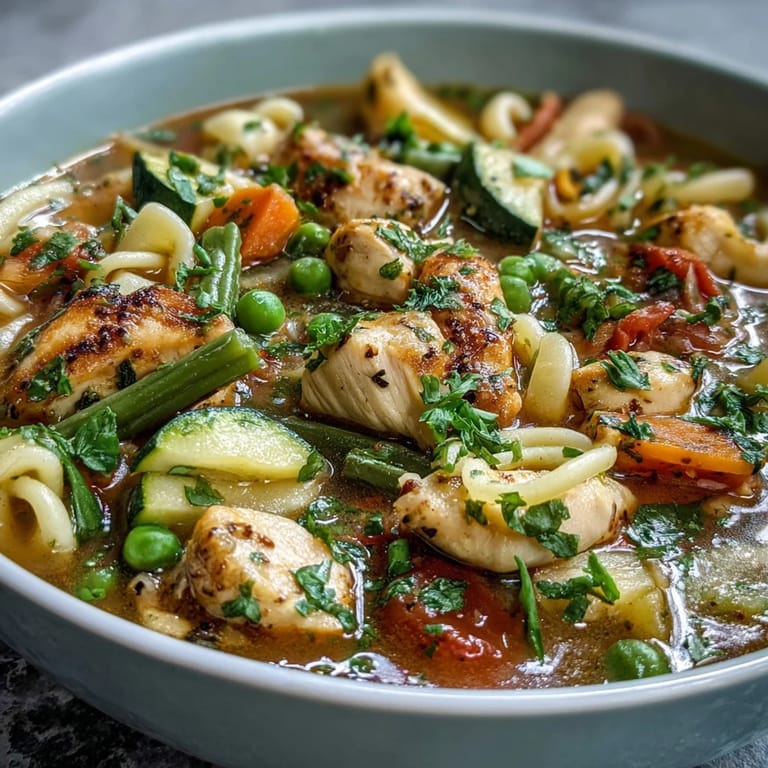
 There is nothing quite like watching someone take their first spoonful of this soup and seeing their shoulders drop three inches as they relax. Comfort food is not just about ingredients—it is about how it makes people feel and this one never fails.
Recipe FAQs
- → Can I make this soup ahead of time?
Yes, you can prepare this soup up to 2 days in advance. Store it in the refrigerator and reheat gently on the stove, adding a splash of broth if needed as pasta absorbs liquid.
- → What pasta shapes work best?
Small pasta shapes like ditalini, elbow macaroni, orzo, or small shells work perfectly. They hold up well in liquid and are easy to spoon up with the vegetables and chicken.
- → Can I use rotisserie chicken instead?
Absolutely. Using shredded rotisserie chicken is a great shortcut. Add it during the last 10 minutes of cooking with the pasta to heat through without overcooking.
- → How do I store leftovers?
Store cooled soup in an airtight container in the refrigerator for 3-4 days. The pasta will continue absorbing broth, so you may need to add extra liquid when reheating.
- → Can I freeze this soup?
Yes, freeze for up to 3 months. For best results, slightly undercook the pasta as it will soften when reheated. Thaw overnight in the refrigerator before warming.
- → How can I make this gluten-free?
Substitute regular pasta with your favorite gluten-free pasta variety. Also ensure your chicken broth is certified gluten-free, as some brands contain gluten-based additives.