 Save to Pinterest
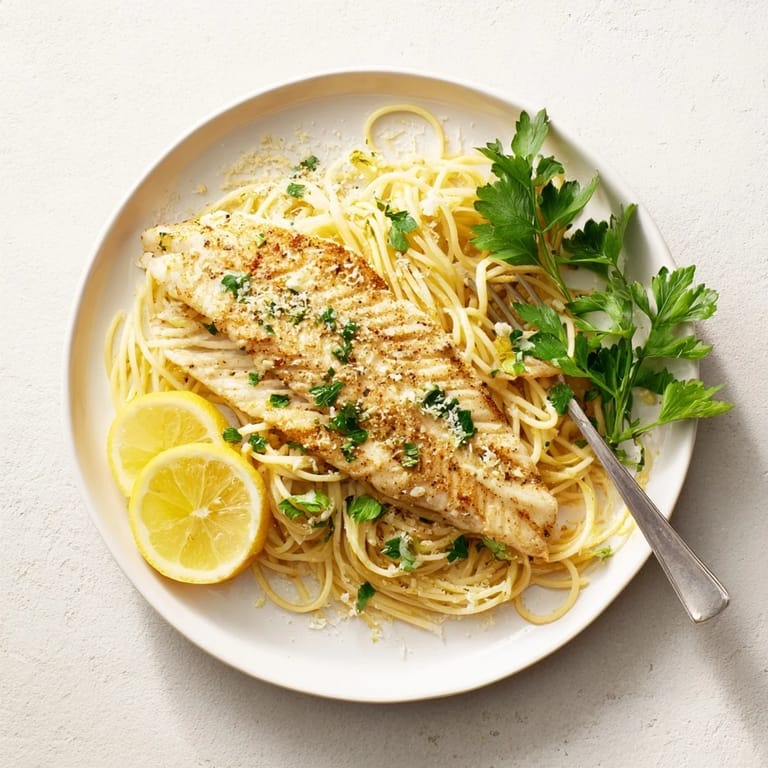
 My neighbor brought back fresh sea bass from the coast one Sunday, and I wanted to make something that wouldn't mask the delicate flavor. I had lemons, butter, and a box of spaghetti, nothing fancy. The grilled fish sat on top of that glossy, citrus-kissed pasta like it belonged there, and we ate it outside while the grill was still warm. It felt effortless, even though I was secretly nervous about overcooking the fish. That meal taught me that simplicity, done right, doesn't need an excuse.
I made this for my sister when she was going through a rough week, the kind where nothing sounds good but you still need to eat. She sat at the kitchen counter while I cooked, and the smell of garlic and lemon seemed to pull her out of her fog a little. By the time I plated it, she was already reaching for a fork. Sometimes food doesn't fix things, but it can make the moment softer.
Ingredients
- White fish fillets: Sea bass is buttery and mild, but cod or halibut work just as well if you need a more budget friendly option.
- Olive oil: Use a good one for drizzling on the fish, it makes a difference when you're grilling something this delicate.
- Lemon zest and juice: The zest carries the fragrant oils, while the juice gives that bright acidity, don't skip either.
- Spaghetti or linguine: I prefer linguine because it holds the sauce better, but spaghetti is just as lovely.
- Unsalted butter: This is your silkiness, it emulsifies with the pasta water to create that restaurant quality gloss.
- Garlic cloves: Mince them finely so they melt into the sauce, not burn in chunky bits.
- Fresh parsley: Flat leaf parsley has more flavor than curly, and it adds a grassy freshness that dried herbs can't replicate.
- Parmesan cheese: Grate it yourself from a block, the pre shredded stuff has anti caking agents that make the sauce gritty.
- Reserved pasta water: This starchy liquid is the secret to making everything come together, don't pour it all down the drain.
Tired of Takeout? 🥡
Get 10 meals you can make faster than delivery arrives. Seriously.
One email. No spam. Unsubscribe anytime.
Instructions
- Boil the pasta:
- Bring a large pot of salted water to a rolling boil, then cook the pasta until it still has a slight bite. Before draining, scoop out half a cup of that cloudy pasta water and set it aside.
- Prep the fish:
- Pat the fillets completely dry with paper towels so they sear instead of steam. Drizzle with olive oil, season with salt, pepper, and lemon zest, pressing the zest gently into the flesh.
- Grill the fish:
- Heat your grill pan until it's almost smoking, then lay the fillets down without moving them for 3 to 4 minutes per side. They should release easily when they're ready to flip.
- Keep the fish warm:
- Once the fish is opaque and flakes with a fork, transfer it to a plate and cover loosely with foil. This keeps it moist while you finish the pasta.
- Build the sauce:
- In a large skillet, melt butter with olive oil over medium heat, then add minced garlic and stir for about a minute until it smells toasty but not brown. Pour in lemon zest and juice, letting it sizzle.
- Toss the pasta:
- Add the drained pasta to the skillet and toss it with tongs, adding reserved pasta water a little at a time until the sauce coats every strand. It should look glossy, not dry or soupy.
- Finish with herbs and cheese:
- Stir in chopped parsley and grated Parmesan, then taste and adjust with salt and black pepper. The cheese will thicken the sauce slightly as it melts.
- Plate and serve:
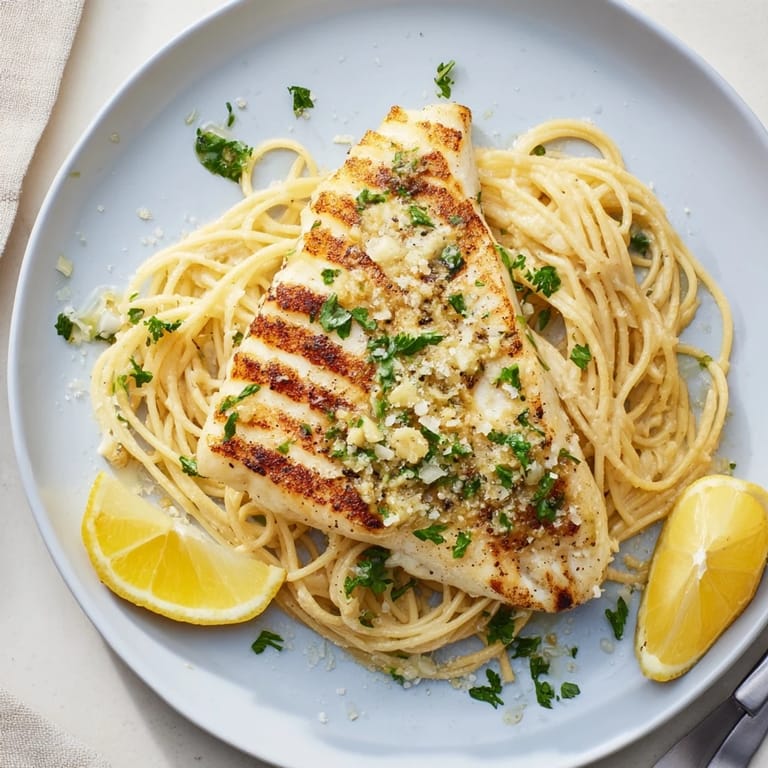
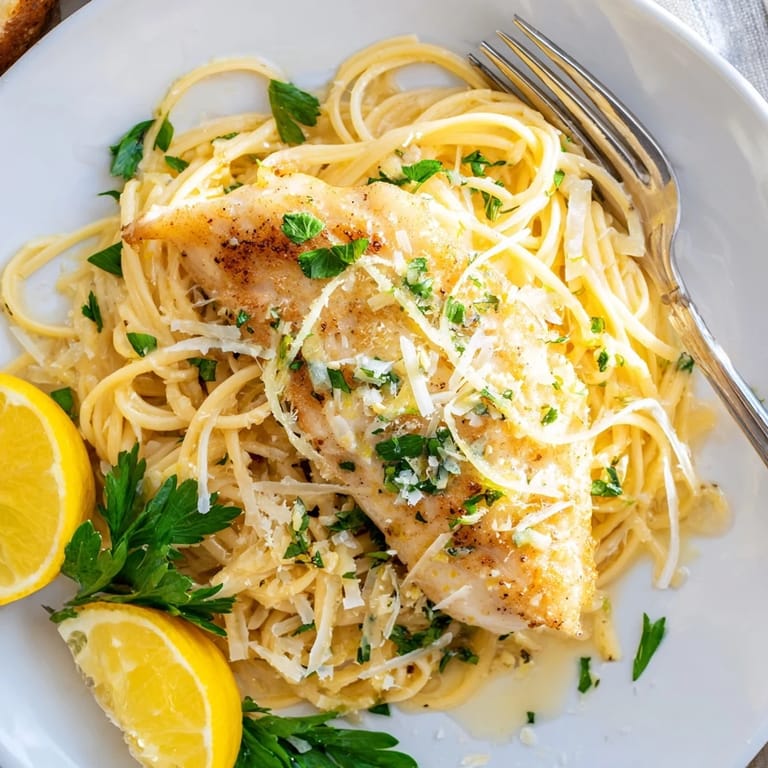
- Twirl the pasta into shallow bowls or plates, then set a grilled fish fillet on top of each portion. Garnish with lemon wedges, extra parsley, and more Parmesan if you like.
 Save to Pinterest
 The first time I nailed this dish, I realized I'd been overthinking pasta for years. The reserved pasta water was the trick I'd always heard about but never really trusted. When I saw that sauce go from separated to silky in seconds, I felt like I'd unlocked something. Now I save that starchy water for almost every pasta I make, and it's changed everything.
Choosing Your Fish
Sea bass is luxurious and forgiving, but it can be pricey depending on where you live. Cod is firmer and holds up beautifully on the grill, while halibut is meaty and mild. I've even used tilapia in a pinch, though it's more delicate and needs a gentler hand. Whatever you choose, make sure it's fresh, it should smell like the ocean, not fishy.
Getting the Pasta Right
Al dente isn't just a fancy term, it means the pasta still has structure and won't turn mushy when you toss it in the sauce. I set my timer for two minutes less than the package suggests, then taste a strand. If it has a slight firmness in the center, it's ready. Remember, it'll keep cooking a little in the hot skillet.
Serving and Pairing
This dish is best eaten immediately, while the pasta is glossy and the fish is warm. I like to serve it with a simple arugula salad dressed in lemon vinaigrette, and a cold glass of Sauvignon Blanc or Pinot Grigio. If you're feeding a crowd, you can prep the fish and sauce components ahead, then toss everything together just before serving.
- Add a pinch of red pepper flakes to the garlic if you like a little heat.
- Swap parsley for fresh basil or dill if that's what you have on hand.
- Leftovers keep for a day in the fridge, just reheat gently with a splash of water or broth.
 Save to Pinterest
 This recipe has become my go to when I want something that feels special without the stress. It reminds me that good food doesn't need to be complicated, just honest and made with care.
Recipe FAQs
- → What type of white fish works best for this dish?
Sea bass and cod are excellent choices, but you can substitute other mild white fish like halibut, flounder, or snapper. Select fillets that are similar in thickness for even cooking.
- → Can I prepare this without a grill?
Yes. Pan-sear the fish in a hot skillet with olive oil for 3-4 minutes per side until opaque. A grill pan also works well to achieve those characteristic grill marks.
- → How do I prevent the fish from sticking?
Pat the fillets completely dry before cooking, oil the grill or pan generously, and let the surface develop a slight crust before attempting to flip. Don't move the fish too early.
- → What if I don't have fresh lemon juice?
Fresh lemon juice is essential for the bright flavor profile. Bottled lemon juice can work in a pinch, but reduce the quantity slightly as it's more concentrated and acidic.
- → Can I make this gluten-free?
Absolutely. Simply use gluten-free pasta and verify that all other ingredients, particularly soy sauce if added, are certified gluten-free. The rest of the ingredients are naturally gluten-free.
- → How do I store leftovers?
Store fish and pasta separately in airtight containers in the refrigerator for up to two days. Reheat gently on the stovetop with a splash of water to restore the sauce's silky texture.