 Save to Pinterest
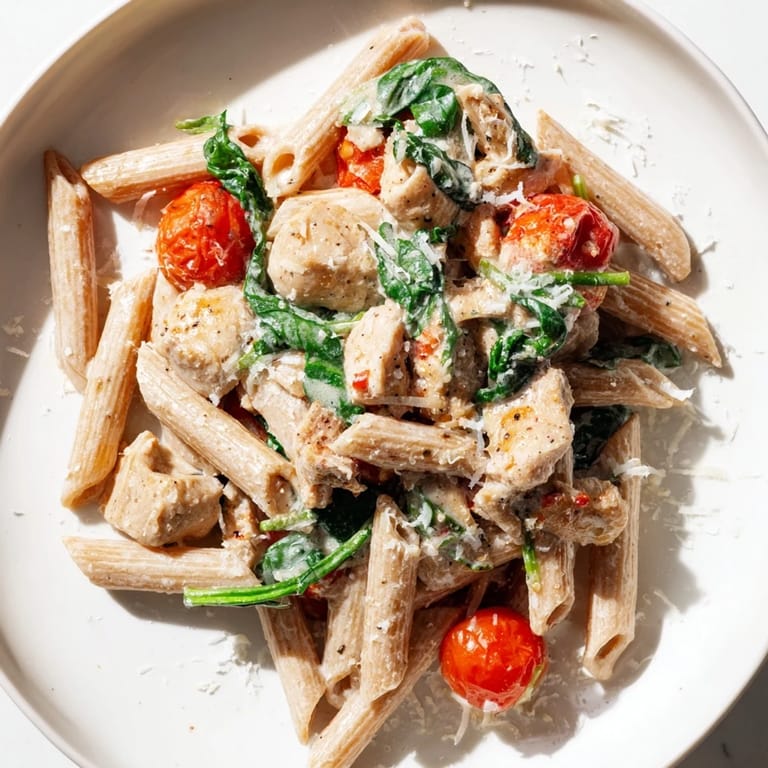
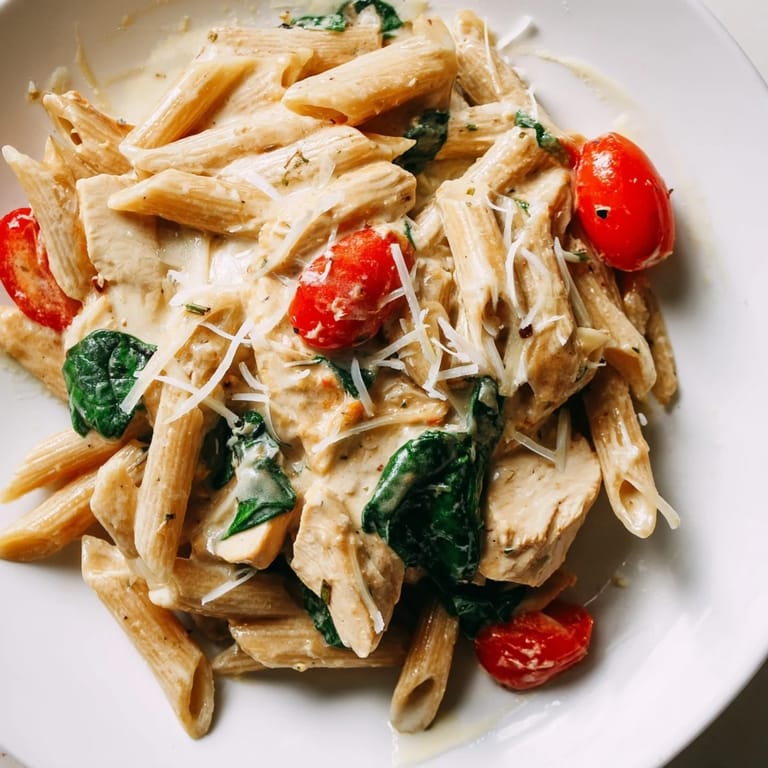
 My roommate once stood in the kitchen doorway, staring at me stirring yogurt into hot pasta sauce like I'd lost my mind. She asked if I was trying to ruin dinner on purpose. Twenty minutes later, she was scraping her plate clean and texting her mom for the recipe. That's the magic of Greek yogurt in pasta: it sounds risky, tastes incredible, and sneaks in enough protein to justify a second bowl without the guilt.
I made this the night before a big work presentation when I needed something fast but satisfying. The kitchen smelled like garlic and oregano, and I remember feeling my shoulders drop as I twirled that first forkful. My partner walked in, took one bite from my bowl, and declared it better than the pasta place we used to overpay for downtown. It became our weeknight anchor after that.
Ingredients
- Boneless, skinless chicken breasts: I cut them into smaller pieces than I think I should because they cook faster and coat better with the sauce, plus every bite gets protein instead of one giant chunk.
- Whole wheat penne or fusilli: The ridges and shape grab onto that creamy yogurt sauce like they were designed for it, and the whole wheat keeps you full longer without feeling heavy.
- Plain Greek yogurt: This is the star, adding creaminess and tang while doubling the protein, just make sure it's at room temperature or it can seize up when it hits the heat.
- Grated Parmesan cheese: Freshly grated melts into the sauce and adds that nutty, salty depth that makes you close your eyes on the first bite.
- Olive oil: I use it to get a golden sear on the chicken and to coax sweetness out of the onion, it's the base that everything else builds on.
- Garlic cloves, minced: Three cloves might sound like a lot until you taste it, then you'll wonder why you ever used less.
- Small onion, finely chopped: It melts into the background but adds a subtle sweetness that rounds out the tangy yogurt.
- Baby spinach, roughly chopped: It wilts down to almost nothing but leaves behind color, nutrients, and a slight earthiness that makes the dish feel complete.
- Cherry tomatoes, halved: They burst and release just enough juice to brighten the whole sauce without making it watery.
- Low-sodium chicken broth: This loosens the sauce and adds savory depth, plus you can control the salt level yourself.
- Dried oregano: It brings that Mediterranean warmth that makes the kitchen smell like a vacation.
- Dried basil: A whisper of sweetness that plays well with the tomatoes and yogurt.
- Paprika: Just enough to give the chicken a hint of smokiness and a gorgeous color.
- Salt and freshly ground black pepper: Taste as you go, the Parmesan and broth add salt so you might need less than you think.
- Juice of half a lemon: This is the secret weapon, it wakes up every other flavor and keeps the yogurt from tasting flat.
Tired of Takeout? 🥡
Get 10 meals you can make faster than delivery arrives. Seriously.
One email. No spam. Unsubscribe anytime.
Instructions
- Boil the pasta:
- Get your water boiling and salt it like the sea, then cook the pasta until it still has a tiny bite in the center. Save a mugful of that starchy pasta water before you drain, it's your backup plan for a silkier sauce later.
- Sear the chicken:
- Heat the oil until it shimmers, then add the chicken in a single layer so it gets golden instead of steaming. Season it now while it's cooking, the spices will toast and stick to the meat.
- Sauté the aromatics:
- Use the same skillet with all those browned bits stuck to the bottom, they're flavor gold. The onion should go soft and sweet, then the garlic just needs 30 seconds or it'll turn bitter.
- Cook the vegetables:
- Tomatoes first until they start to collapse and release their juice, then spinach until it wilts into bright green ribbons. This whole step takes less than three minutes but adds so much life to the dish.
- Simmer with broth:
- Bring the chicken back, pour in the broth, and let it bubble for a minute. This is where everything starts to come together and smell like dinner.
- Stir in the yogurt mixture:
- Take the pan off the heat first, this is crucial or the yogurt will break and turn grainy. Stir in the yogurt, Parmesan, lemon juice, and a splash of pasta water until it's smooth and glossy.
- Toss with pasta:
- Add the drained pasta and toss it all together, adding more pasta water a little at a time until the sauce clings to every piece. Taste and adjust the salt and pepper now.
- Serve immediately:
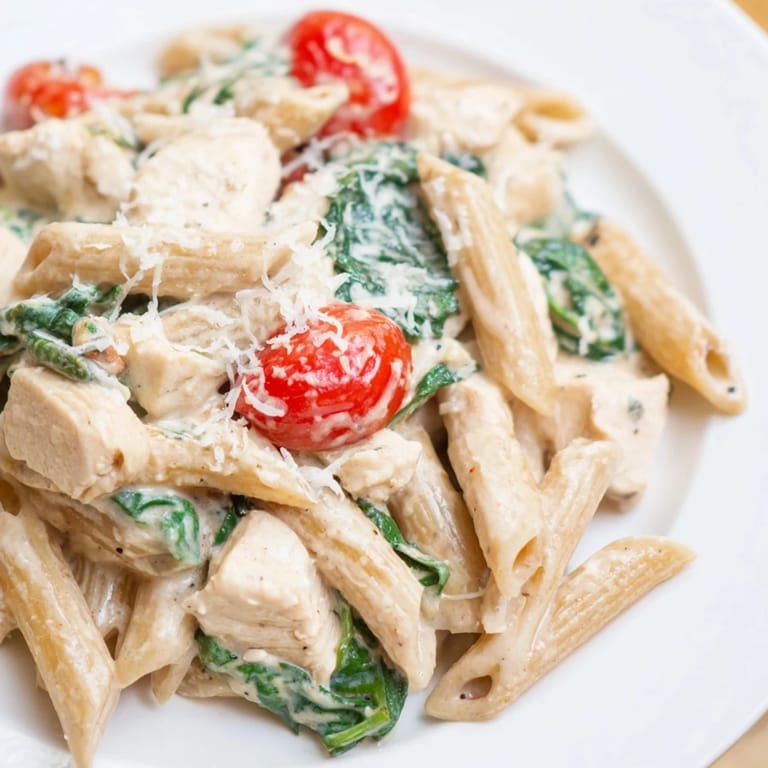
- This dish is best the moment it's done, when the sauce is creamy and the pasta is hot. A little extra Parmesan and fresh basil on top makes it look as good as it tastes.
 Save to Pinterest
 One Sunday, I doubled this recipe for a small dinner party and watched four people go quiet over their bowls. My friend Sarah, who usually picks at anything creamy, asked what I used to make it so light. When I told her it was yogurt, she looked at me like I'd revealed a magic trick. That's when I realized this dish doesn't just feed people, it surprises them.
Making It Your Own
This recipe is flexible enough to handle whatever's in your fridge. I've stirred in steamed broccoli when I needed more green, swapped the chicken for turkey on Thanksgiving weekend, and even tossed in a can of drained chickpeas when my vegetarian sister came over. The sauce doesn't care what protein you use, it just wants to coat something delicious. If you're gluten-free, the pasta swaps out easily without changing a single other thing.
Getting the Texture Right
The sauce should be creamy but not thick like glue, more like it's hugging the pasta instead of drowning it. If it looks too tight, add pasta water a tablespoon at a time while tossing, the starch will loosen it up and make it glossy. If it's too loose, let it sit for a minute off the heat and it'll tighten as it cools slightly. I used to add too much liquid at once and end up with soup, now I go slow and stop when it looks right.
Storing and Reheating
Leftovers keep in the fridge for up to three days in an airtight container, and they reheat better than most creamy pastas. Add a splash of chicken broth or water to a skillet, toss the pasta in over medium-low heat, and stir gently until it's warmed through and the sauce comes back to life. Don't microwave it without adding liquid or you'll end up with dry, sad noodles.
- Let the yogurt come to room temperature before stirring it in for the smoothest sauce.
- Use the pasta water generously, it's free sauce thickener with built-in starch.
- Leftovers reheat best on the stovetop with a splash of broth, not in the microwave.
 Save to Pinterest
 This is the kind of dinner that makes you feel capable and cared for at the same time. You'll make it once, then find yourself craving it every time you need something easy and satisfying.
Recipe FAQs
- → Why shouldn't I boil the pasta after adding Greek yogurt?
Greek yogurt can curdle if exposed to high heat. By keeping the pan at medium-low temperature and removing it from heat before stirring in the yogurt, you preserve its creamy texture and smooth sauce consistency.
- → Can I make this dish ahead of time?
Yes, you can prepare the sauce components in advance. Store the cooked chicken and vegetable mixture separately. Combine with pasta and yogurt sauce just before serving for the best texture and flavor.
- → What pasta shapes work best for this dish?
Penne and fusilli are ideal because their ridges and spiral shapes trap the creamy sauce. Rigatoni or farfalle also work well. Avoid thin pastas like angel hair, which may become overly soft.
- → How can I substitute the chicken?
Turkey breast provides a similar lean protein option. For vegetarian versions, use cooked chickpeas, white beans, or firm tofu cut into bite-sized pieces. Adjust cooking times accordingly.
- → What if the sauce is too thick?
Gradually add more reserved pasta water, one tablespoon at a time, while stirring continuously. The starch in pasta water helps the sauce cling better to the noodles than regular water.
- → Is this suitable for gluten-free diets?
Yes, simply swap the wheat pasta for certified gluten-free varieties. The remainder of the ingredients are naturally gluten-free. Always verify labels for potential cross-contamination.