 Save to Pinterest
 There's something about the sound of chicken hitting hot broth that makes everything feel right. My mom used to make this soup on afternoons when the kitchen was cold and quiet, and somehow the house would fill with this golden warmth before anyone even sat down to eat. I've made it hundreds of times since then, sometimes rushing through it on a Tuesday night, other times letting it simmer while I do something else entirely. Each time, it tastes like home tastes like comfort that doesn't require explanation.
I made this for my roommate once when she came home sick from work, and she sat at the kitchen counter in her coat while the pot bubbled away. She said later that she could smell it from the hallway and knew someone cared enough to make real food instead of ordering takeout. That's when I realized this soup isn't just about feeding people it's about showing up for them.
Ingredients
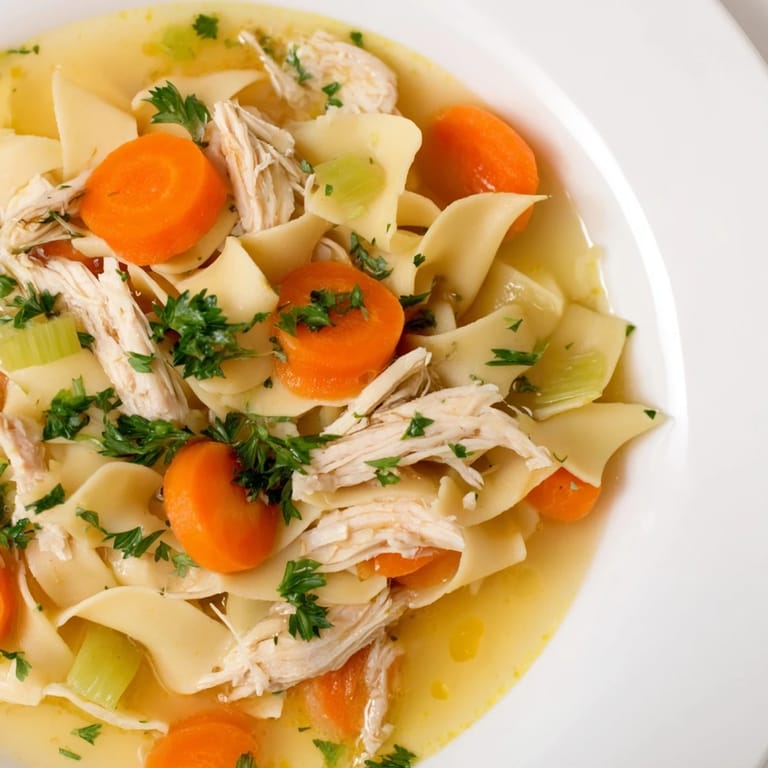
- Chicken breasts or thighs: Boneless, skinless breasts cook faster and stay tender when simmered whole, but thighs give you a richer, more forgiving broth that's harder to mess up.
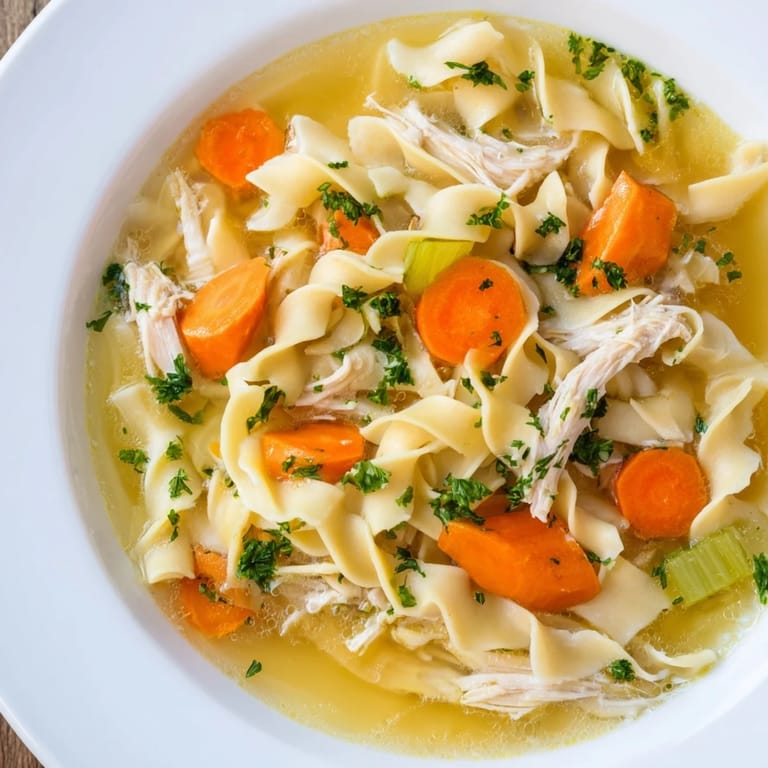
- Carrots and celery: These two are the backbone of any good soup base, and cutting them into coins instead of chunks lets them mellow into the broth instead of staying stubbornly crunchy.
- Onion and garlic: The onion needs a minute or two in the hot oil before you add anything else so the garlic doesn't burn while you're waiting for the onion to soften.
- Low-sodium chicken broth: Using low-sodium lets you control the salt and taste as you go, rather than fighting an oversalted pot halfway through.
- Wide egg noodles: They hold onto the broth better than thin noodles and won't turn to mush if your timing is off by a minute.
- Bay leaf and thyme: The bay leaf needs to come out before serving unless you want someone biting into it, and dried thyme is gentler than fresh in long-simmered broths.
- Fresh parsley: Add most of it at the end so it stays bright green and doesn't turn an unappetizing gray.
- Olive oil: Just enough to keep the vegetables from sticking and to let the onions release their sweetness.
Tired of Takeout? 🥡
Get 10 meals you can make faster than delivery arrives. Seriously.
One email. No spam. Unsubscribe anytime.
Instructions
- Start with the soffritto:
- Heat the oil and let the onions, carrots, and celery cook together for about five minutes. You're not trying to brown them just soften them so they lose their raw edge and start to smell like soup.
- Wake up the garlic:
- Add the minced garlic and let it cook for just a minute until it becomes fragrant. This moment is quick but crucial; a minute too long and it turns bitter.
- Build the broth:
- Place the whole chicken breasts into the pot with the broth, bay leaf, thyme, salt, and pepper. Bring everything to a boil, then turn the heat down so it simmers gently without aggressively bubbling.
- Cook the chicken through:
- Simmer for fifteen to twenty minutes depending on how thick your breasts are. You'll know it's done when you can easily pull the meat apart with a fork.
- Shred and return:
- Remove the chicken to a cutting board or plate, let it cool for a minute, then use two forks to shred it into bite-sized pieces. Return all that chicken to the pot.
- Add the noodles:
- Stir in the egg noodles and let them cook for seven to eight minutes, stirring occasionally so they don't clump together at the bottom. Taste a noodle to make sure it's tender before moving on.
- Finish and adjust:
- Stir in the fresh parsley, then taste the whole thing. Add more salt or pepper if it needs it, and fish out that bay leaf.
 Save to Pinterest
 There was an evening when my brother came over unexpectedly between jobs and looking lost, and I made this soup without asking if he was hungry. We sat and talked for hours while he had three bowls, and by the time he left, he seemed lighter somehow. I've always believed that food can hold space for people when words aren't quite enough.
Why This Soup Never Fails
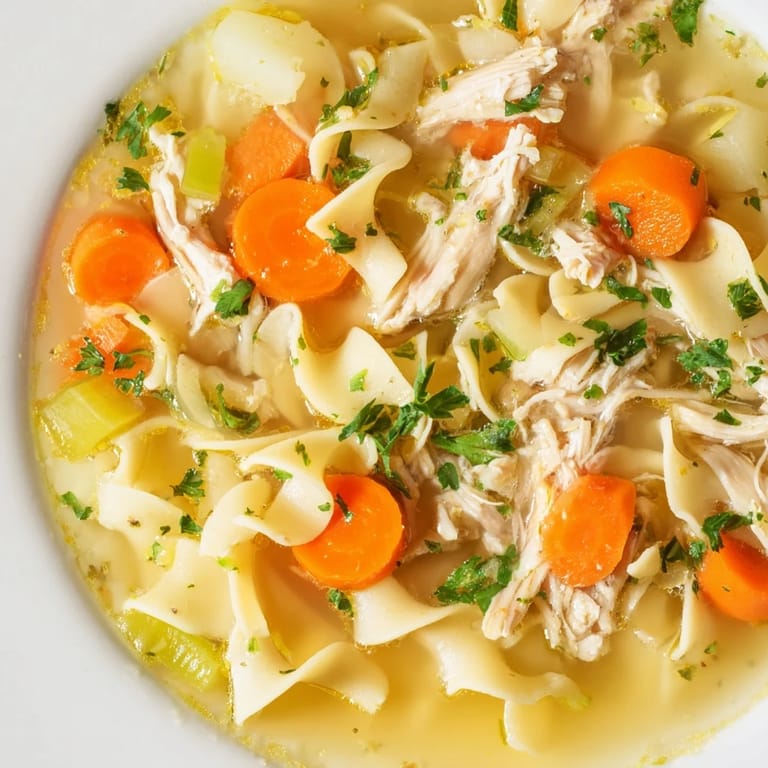
The magic of chicken noodle soup is that it doesn't require perfection or expensive ingredients. It works with what you have, forgives small mistakes, and somehow tastes better the next day than it does fresh from the pot. The vegetables soften into the broth until they're barely there, the chicken stays moist and shreds easily, and the noodles soak up flavor like they've been waiting their whole life for this moment.
Customizing It to Your Mood
Some nights I'll add a handful of frozen peas in the last minute, letting them warm through until they're sweet and tender. Other times I squeeze lemon juice over the finished bowl because the acidity cuts through the richness and makes everything taste more alive. You can simmer diced potatoes alongside the chicken if you want something more substantial, or add fresh spinach at the very end if you're trying to sneak in extra greens.
Serving and Keeping It Close
Ladle it into bowls while it's still steaming, and garnish with a little more fresh parsley so it looks like someone cared enough to finish it properly. This soup keeps in the refrigerator for three or four days, and it actually improves as it sits because the flavors keep mingling together overnight. Reheat it gently on the stovetop, adding a splash of broth if it's gotten too thick.
- Crusty bread on the side turns a bowl of soup into a meal that feels complete.
- If you're making it for someone, taste it one more time before serving so you can adjust the seasoning to your preference.
- The whole thing is dairy-free and gluten-free if you use gluten-free noodles, so it works for almost everyone.
 Save to Pinterest
 This is the kind of soup that taught me cooking doesn't have to be complicated to be meaningful. Make it whenever you need comfort, whenever someone you care about needs comfort, or just because a Wednesday afternoon feels like the right time to fill the house with warmth.
Recipe FAQs
- → What type of chicken is best to use?
Boneless, skinless chicken breasts or thighs work well; thighs offer richer flavor and juiciness.
- → Can I use gluten-free noodles?
Yes, substitute wide egg noodles with gluten-free varieties to accommodate dietary needs.
- → How do I keep the broth flavorful but light?
Simmer the chicken with herbs like thyme and bay leaf, and avoid heavy creams or thickeners for a light broth.
- → What vegetables enhance this dish?
Carrots, celery, onions, and garlic add depth; optional peas or corn add sweetness and color.
- → How can I make the soup more hearty?
Add bone-in chicken for richer flavor or serve with crusty bread to complement the meal.