 Save to Pinterest
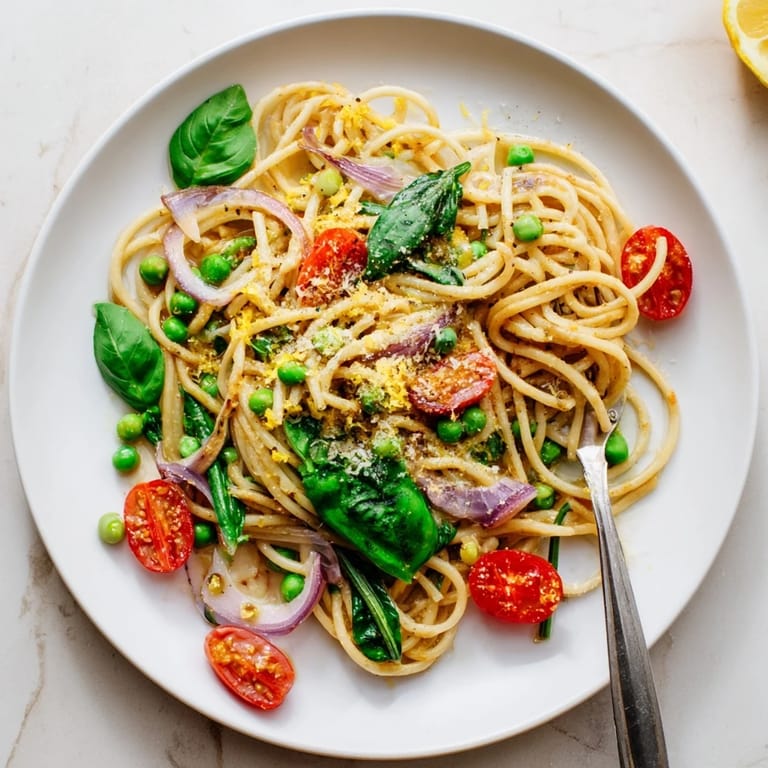
 I stumbled upon this technique during a particularly chaotic Tuesday when my sink was piled high with dishes and I refused to add another pan to the mess. The pasta cooks directly in the broth, absorbing all those vegetal flavors while the starches create this unbelievably creamy sauce without a drop of cream. Now it has become my go-to for those nights when something vibrant and comforting needs to happen fast.
Last spring, my friend Sarah dropped by unexpectedly while I had this bubbling away on the stove. She took one smell of the garlic and tomatoes, asked what I was making, and ended up staying for dinner. We ate standing in the kitchen, twirling noodles and talking until the pot was scraped clean, which is pretty much the highest compliment a pasta dish can receive.
Ingredients
- 350 g (12 oz) dried spaghetti: Break in half if your pot is on the smaller side, though I love the drama of long noodles if you have the room
- 150 g (1 cup) frozen or fresh peas: Frozen work beautifully here and add pops of sweetness that balance the savory broth
- 100 g (3.5 oz) baby spinach: Wilts down into silky ribbons that weave through the pasta
- 200 g (7 oz) cherry tomatoes, halved: Burst during cooking to release their juices into the sauce
- 2 cloves garlic, thinly sliced: Thin slices mean they will soften and sweeten rather than burn
- 1 small red onion, thinly sliced: Adds a mild sweetness that plays beautifully with the spring vegetables
- 1 L (4 cups) vegetable broth: The pasta absorbs almost all of this, so choose one you actually like drinking
- 2 tbsp olive oil: Coats the vegetables and adds a fruity finish
- 1/2 tsp salt: Adjust based on how salty your broth is
- 1/4 tsp black pepper: Freshly cracked makes a noticeable difference
- 1/4 tsp red pepper flakes (optional): Adds just enough warmth to wake up the palate
- Zest of 1 lemon: Brightens everything and cuts through the richness
- 30 g (1/4 cup) grated Parmesan cheese: Use a vegetarian alternative if needed
- Fresh basil leaves: Tear them by hand for the most aromatic finish
Tired of Takeout? 🥡
Get 10 meals you can make faster than delivery arrives. Seriously.
One email. No spam. Unsubscribe anytime.
Instructions
- Build the flavor base:
- Heat the olive oil in your largest pot over medium heat, then add the sliced garlic and red onion. Let them sizzle gently for 2 to 3 minutes until the onion turns translucent and the garlic becomes fragrant without browning.
- Add everything but the kitchen sink:
- Pile in the spaghetti, peas, spinach, and cherry tomatoes, then pour in the vegetable broth. The pot will look crowded but the vegetables will cook down significantly.
- Season and simmer:
- Add the salt, black pepper, and red pepper flakes if using. Bring everything to a boil, then stir occasionally to keep the pasta from sticking together as it cooks.
- Cook to perfection:
- Let it bubble uncovered for 10 to 12 minutes, checking the pasta for doneness. You want it al dente with just enough thickened, starchy liquid remaining to coat each strand rather than a soupy consistency.
- Finish with brightness:
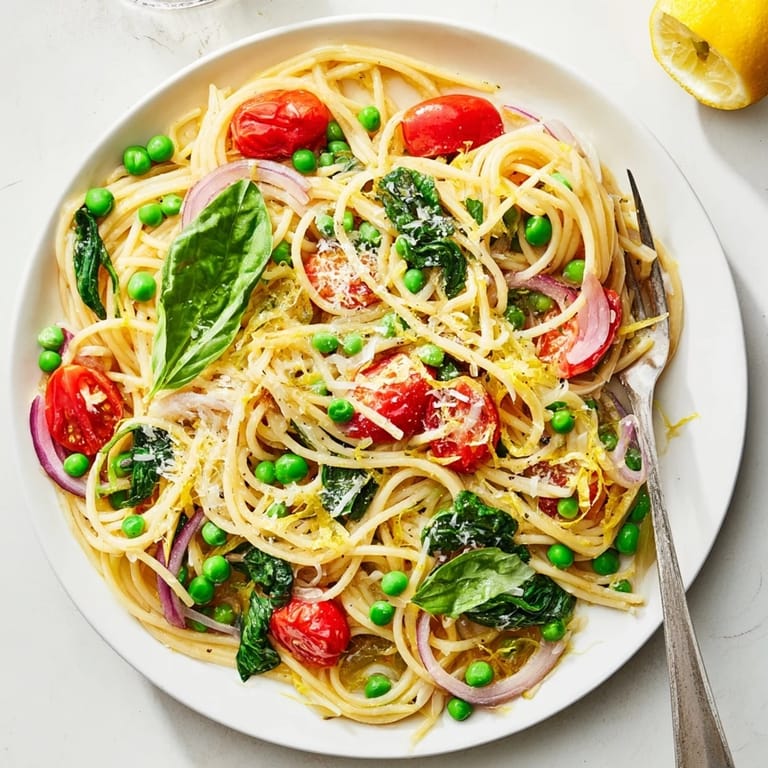
- Stir in the lemon zest just before removing from heat, then divide among warm bowls and top generously with Parmesan and fresh basil.
 Save to Pinterest
 This recipe has saved me on countless weeknights when I wanted something nourishing but had zero energy for a production. There is something deeply satisfying about a meal that comes together in one vessel yet tastes like it simmered all day.
Make It Your Own
The beauty of this method is how adaptable it is to whatever vegetables are languishing in your crisper drawer. Asparagus, zucchini, or even green beans would all be right at home here.
Serving Suggestions
A crisp white wine like Sauvignon Blanc cuts through the starch and complements the spring vegetables perfectly. I also love serving this with a simple green salad dressed with vinaigrette.
Storage and Reheating
The pasta will continue absorbing liquid as it sits, so leftovers become more of a pasta dish than a brothy one. I actually think it tastes even better the next day when the flavors have had time to marry.
- Store in an airtight container in the refrigerator for up to 3 days
- Reheat with a splash of water or broth to loosen the sauce
- The pasta may soften slightly, but the vegetables hold up beautifully
 Save to Pinterest
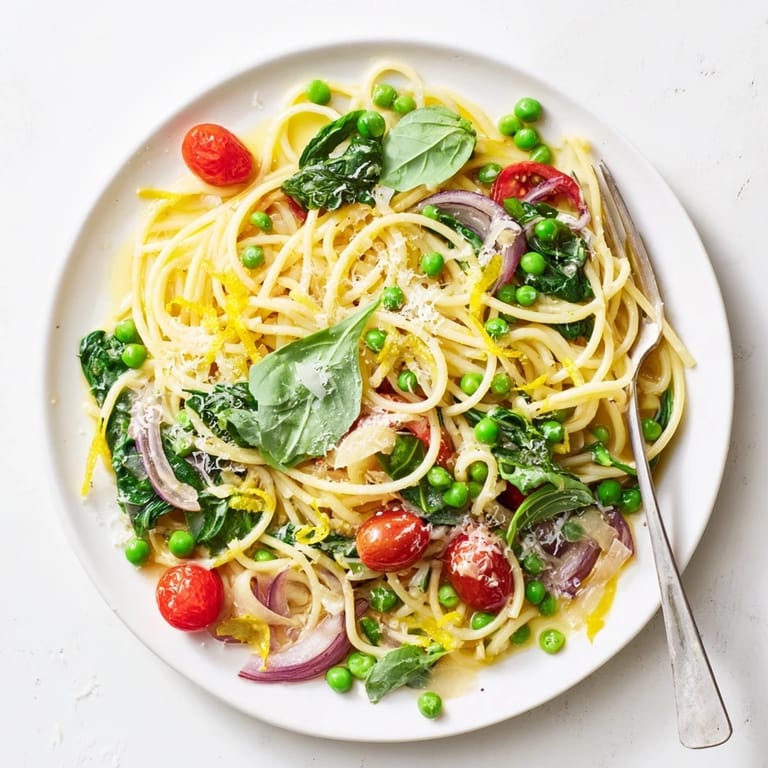
 There is nothing quite like standing over a steaming pot of pasta, spoon in hand, knowing dinner is just minutes away. Hope this becomes a staple in your kitchen too.
Recipe FAQs
- → Can I use fresh vegetables instead of frozen peas?
Absolutely. Fresh peas work beautifully in this dish. Just add them with the other vegetables in step 2. They may need an extra minute or two to become tender compared to frozen peas.
- → How do I prevent the pasta from sticking to the pot?
Stir occasionally during cooking, especially in the first few minutes as the pasta softens. The broth should be sufficient to keep everything moving, but a gentle stir every few minutes ensures nothing sticks to the bottom.
- → Can I make this dish gluten-free?
Yes. Simply substitute the regular spaghetti with your favorite gluten-free pasta. Cooking times may vary slightly, so check for doneness a minute or two earlier than the recipe suggests.
- → What other vegetables can I add?
Asparagus, zucchini, bell peppers, or artichoke hearts work wonderfully. Add harder vegetables like asparagus or zucchini in step 2, but wait until the last 3 minutes to add delicate greens like arugula.
- → Can I add protein to make it more filling?
Yes. Add a drained can of chickpeas or white beans in step 2. You could also stir in shredded rotisserie chicken at the end, or top with crumbled feta instead of Parmesan for a different protein boost.
- → How long do leftovers keep?
Store in an airtight container in the refrigerator for up to 3 days. Reheat with a splash of water or broth to loosen the pasta. The pasta will continue absorbing liquid, so leftovers may be thicker than when freshly made.