 Save to Pinterest
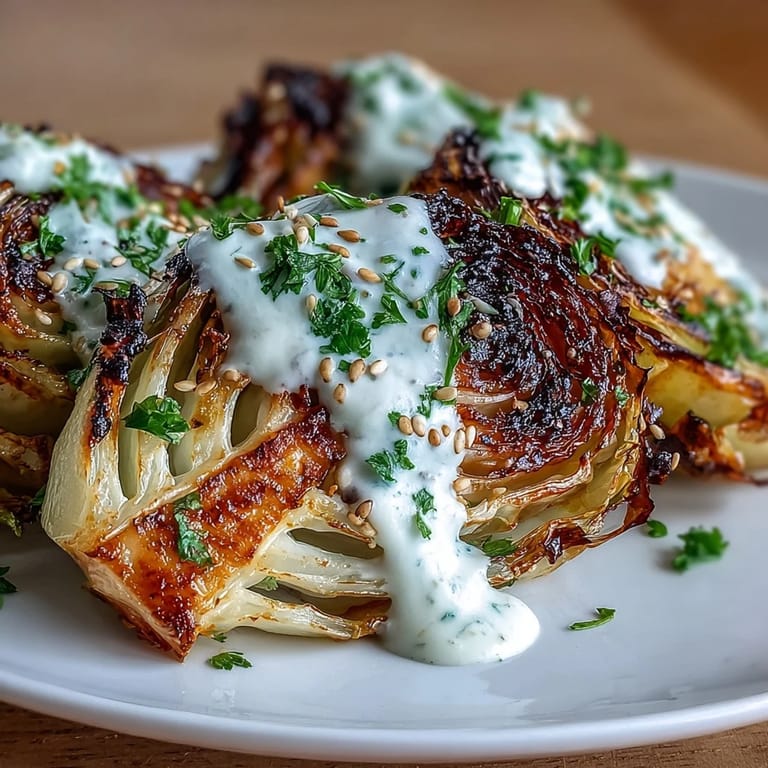
 There's something almost defiant about roasting cabbage until its edges turn golden and crisp—like you're coaxing out a secret the vegetable didn't know it had. My first attempt came from a half-full farmers market bag and the stubborn belief that cabbage deserved more than coleslaw. When those wedges emerged from the oven, caramelized and tender, I understood why this humble vegetable shows up in practically every cuisine that knows what it's doing.
I made this for a dinner party where one guest mentioned being vegan almost apologetically, and I remember the relief on their face when they realized the main course wasn't going to be sad. They went back for seconds and asked for the tahini sauce recipe, which felt like the highest compliment I could receive.
Ingredients
- 1 medium green cabbage (about 2 lbs), cut into 8 wedges with core intact: Keeping the core in holds everything together during roasting—without it, you end up with loose leaves instead of satisfying wedges.
- 2 tbsp olive oil: Use one you don't mind heating; it coats the cabbage evenly and helps those edges crisp up beautifully.
- 1/2 tsp kosher salt and 1/4 tsp freshly ground black pepper: Season generously now; the roasting concentrates flavors, so hold back and you'll taste mostly cabbage.
- 1/3 cup tahini: Buy the kind with just sesame seeds and maybe salt—avoid the ones with added oils or sweeteners that throw off the balance.
- 1 small garlic clove, finely grated: Microplane it if you have one; grating rather than mincing releases more juice and distributes the garlic evenly through the sauce.
- 2 tbsp fresh lemon juice: Fresh is non-negotiable here—bottled lemon juice will make the sauce taste thin and one-dimensional.
- 2–4 tbsp cold water: Add it gradually; tahini sauce can tip from silky to gluey faster than you'd think.
- 1/4 tsp ground cumin and 1/4 tsp kosher salt: These gentle spices tie the whole thing together without competing for attention.
- Toasted sesame seeds, fresh parsley or cilantro, and smoked paprika or Aleppo pepper for garnish: These finish the dish with color, crunch, and a gentle warmth that makes people lean in for another bite.
Tired of Takeout? 🥡
Get 10 meals you can make faster than delivery arrives. Seriously.
One email. No spam. Unsubscribe anytime.
Instructions
- Heat your oven and prep your pan:
- Get the oven to 425°F and line a baking sheet with parchment paper—this prevents sticking and makes cleanup painless. The higher heat is what gives you those crispy, caramelized edges.
- Arrange and oil the cabbage:
- Place each wedge cut-side down on the sheet, then drizzle with olive oil and scatter salt and pepper over the top. Make sure the oil reaches under the wedges too; this is what catches the heat and builds flavor.
- Roast until the edges turn golden:
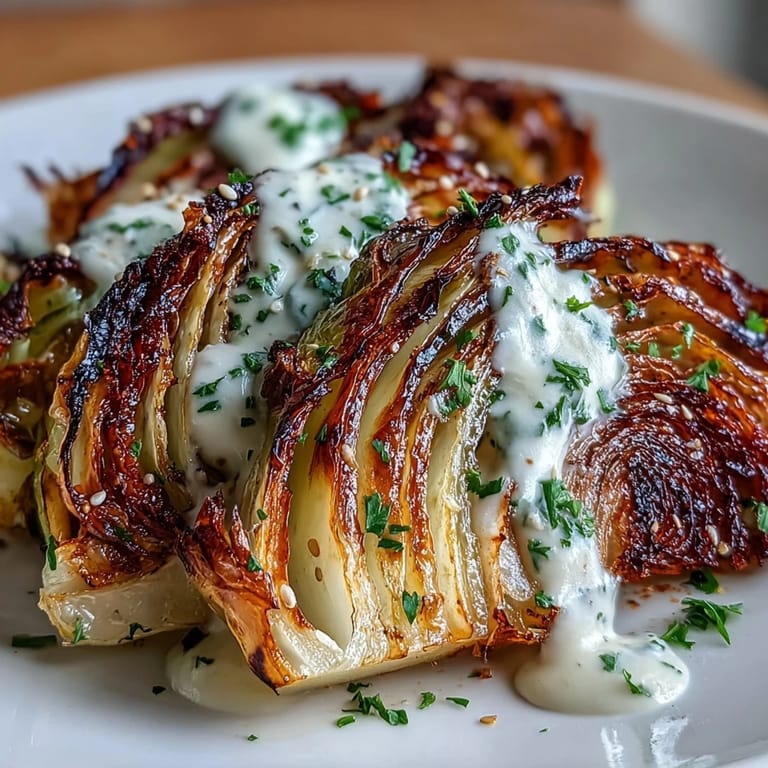
- After about 15 minutes, flip each wedge so the other cut side can kiss the hot pan—you're looking for 25 to 30 minutes total, until the edges have darkened and the cabbage yields easily to a fork. The kitchen will smell like nutty, sweet caramel.
- Build the tahini sauce while the cabbage roasts:
- Whisk tahini, grated garlic, lemon juice, cumin, and salt in a bowl until combined. Slowly add cold water, one tablespoon at a time, whisking until you reach a consistency that pours smoothly—too thick and it sits on the cabbage like paste, too thin and it runs off the plate.
- Plate and dress:
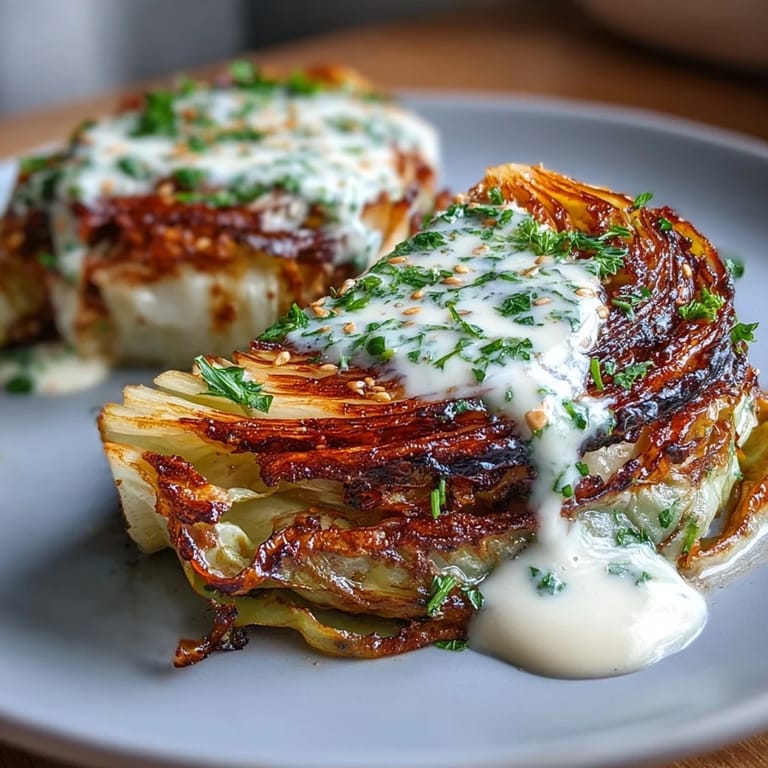
- Transfer the warm cabbage wedges to a serving platter, drizzle generously with tahini sauce, then scatter sesame seeds, herbs, and a pinch of paprika or Aleppo pepper across the top. Serve warm or at room temperature; both are wonderful.
 Save to Pinterest
 There was a quiet moment at that dinner party when everyone stopped talking and just ate, and I realized that sometimes the most memorable meals are the ones that don't try too hard. This dish has that quality—humble, honest, and somehow more satisfying than anything complicated.
Why Roasted Cabbage Becomes a Favorite
Roasting transforms vegetables through heat and time, and cabbage is one of those beautiful candidates that rewards patience. The sugars caramelize, the edges crisp, and what started as a dense, slightly sulfurous vegetable becomes something with actual personality. Once you taste it this way, raw cabbage salad feels like the opening act.
The Tahini Sauce Difference
Tahini sauce is a quiet revolution waiting to happen in your kitchen, mostly because people think it only goes with falafel or hummus. The truth is, it pairs beautifully with roasted vegetables, grains, even warm bread—it's a canvas that draws out other flavors rather than drowning them. Adding cumin and a generous squeeze of lemon juice prevents it from tasting flat or one-note.
Making This Dish Your Own
The base of this recipe is solid, but the variations are where you make it personal. I've experimented with red cabbage, which takes a few minutes longer but develops a deeper sweetness, and once added pomegranate seeds on top for a tart pop that cut through the richness beautifully. The core technique stays the same—roast vegetables until they're tender and caramelized, then dress them with something creamy and bright.
- Serve alongside rice, quinoa, or warm pita to make it more substantial and satisfying.
- A pinch of chili flakes or a drizzle of hot sauce adds heat if you want the dish to wake people up.
- Leftovers taste even better the next day once the flavors have had time to mingle and settle.
 Save to Pinterest
 This dish has lived in my rotation for years now, and it never gets old because it's so forgiving and adaptable. Cook it once and you'll see why something so simple tastes like it required real intention.
Recipe FAQs
- → Can I make the tahini sauce ahead of time?
Yes, the tahini sauce can be prepared up to 5 days in advance and stored in an airtight container in the refrigerator. You may need to add a splash of water when ready to serve, as it thickens when chilled.
- → Can I use red cabbage instead of green?
Absolutely. Red cabbage works well and adds vibrant color. Keep in mind that red cabbage may take slightly longer to become tender, so add an extra 5-10 minutes of roasting time if needed.
- → What can I serve this with?
This pairs beautifully with grilled meats, fish, or plant proteins. It also works well alongside rice, quinoa, or warm pita bread. Serve as part of a Middle Eastern mezze spread with hummus and falafel.
- → How do I store leftovers?
Store roasted cabbage and sauce separately in airtight containers in the refrigerator for up to 3 days. Reheat the cabbage in a 350°F oven or enjoy cold. Bring the sauce to room temperature before serving.
- → Can I freeze this?
The roasted cabbage freezes well for up to 3 months. Thaw overnight in the refrigerator and reheat in the oven to restore crispness. The tahini sauce does not freeze well—make it fresh when ready to serve.
- → How can I add more protein?
Top with chickpeas, lentils, or crumbled feta cheese. Serve alongside grilled chicken, lamb, or tofu. You can also sprinkle chopped walnuts or almonds for additional plant-based protein.