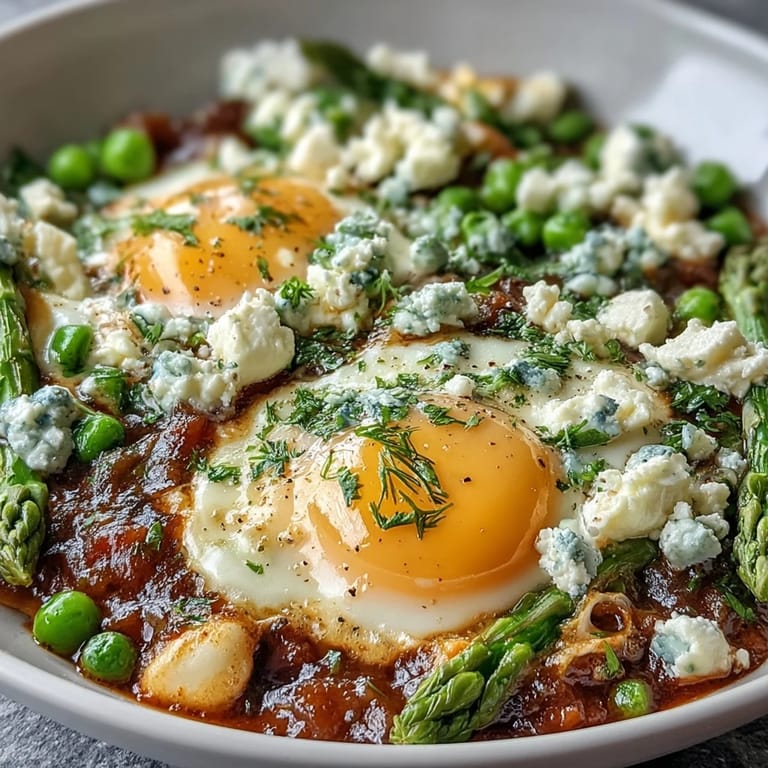
 Save to Pinterest
 There's a moment every spring when I stop at the market and suddenly see fresh broad beans still in their pods, and I know it's time to make shakshuka again. My friend Amara taught me this version one sunny afternoon, and what struck me wasn't just how quickly it came together, but how the kitchen filled with this incredible warmth—cumin and paprika hitting hot oil, that unmistakable smell that makes you want to cook immediately. This dish feels like organized chaos in the best way: vibrant vegetables tumbling into spiced tomato sauce, then those eggs nestling in like they belong there, waiting for just the right moment to set.
I made this for my partner on a Thursday evening when neither of us had planned dinner, and he watched me chop vegetables with this patient smile, clearly skeptical. Twenty minutes later, he was cracking pepper over his bowl and asking if we could make it tomorrow too, which for him is basically a marriage proposal.
Ingredients
- Olive oil (1 tablespoon): Use something you actually enjoy tasting, not the cheapest bottle—it's the foundation that everything else builds on.
- Medium onion, finely chopped: The finer you chop, the faster it softens and the more it dissolves into the sauce, giving you body without chunks.
- Garlic cloves (2), minced: Mince them yourself if you can; jarred garlic never quite captures that bright, sharp edge you need here.
- Red bell pepper, diced: Red ones are sweeter and softer than green, which matters when you're cooking quickly; they'll give you natural sweetness against the spices.
- Asparagus (150 g), trimmed and cut into 2 cm pieces: Cut on the diagonal if you want it to cook faster and look a bit fancy—it's the same effort, just angled differently.
- Fresh or frozen peas (150 g): Frozen are honestly better here because they're picked at peak ripeness; don't thaw them first, just add straight to the pan.
- Fresh or frozen broad beans, shelled (150 g): If using fresh, the shelling takes a few minutes but tastes worth it; frozen saves time without sacrificing flavor or texture.
- Canned chopped tomatoes (400 g) or passata: Passata is smoother and creates a silkier sauce, while chopped tomatoes give you little bursts of acidity—pick whichever you have or prefer.
- Tomato paste (2 tablespoons): This concentrates the tomato flavor and thickens the sauce; stir it into the oil before adding the canned tomatoes so it toasts slightly and becomes less sharp.
- Ground cumin (1 teaspoon): Toast it briefly in the hot oil before adding tomatoes—this single moment releases all its warmth and depth.
- Smoked paprika (1 teaspoon): The smoke is what makes this feel less like ordinary shakshuka and more like something with a story; don't skip it or swap it for regular paprika.
- Ground coriander (½ teaspoon): Subtle and slightly citrusy, it lifts the whole dish without announcing itself loudly.
- Chili flakes (½ teaspoon, optional): Add them if you like gentle heat, or leave them out if you're cooking for people who get nervous about spice.
- Salt and black pepper: Taste as you go—you'll need more salt than you think because the eggs need it too.
- Large eggs (4–6): Bring them to room temperature if you can; they cook more evenly and the yolks stay runnier.
- Fresh parsley or mint, chopped (2 tablespoons): Mint is slightly more unexpected but equally lovely; add it just before serving so it stays bright and doesn't darken in the heat.
- Feta cheese, crumbled (60 g, optional): The tang is perfect against the sweetness of spring vegetables, and it adds a salty note that makes people want another bite.
- Lemon wedges: Serve them on the side and squeeze them in as you eat—the acidity balances everything.
Tired of Takeout? 🥡
Get 10 meals you can make faster than delivery arrives. Seriously.
One email. No spam. Unsubscribe anytime.
Instructions
- Start with the foundation:
- Heat your olive oil in a large, deep skillet over medium heat and add the chopped onion. You'll know it's ready when it's soft and translucent, about 4 to 5 minutes—listen for a gentle sizzle rather than aggressive bubbling, which means your heat is right.
- Build the aromatics:
- Stir in the minced garlic and diced red bell pepper, cooking for 2 to 3 minutes until the peppers start to soften at the edges. The kitchen should smell incredible at this point—if it doesn't, your ingredients might be losing their freshness.
- Toast the spices:
- Add the cumin, smoked paprika, ground coriander, and chili flakes all at once, stirring constantly for just 1 minute. This toasting step is non-negotiable; it wakes up the spices and makes them taste intentional rather than flat.
- Bring in the tomatoes:
- Stir in the tomato paste first, letting it fry for about 30 seconds until it darkens slightly, then add your chopped tomatoes or passata along with salt and pepper. Simmer uncovered for 10 minutes, stirring occasionally, until the sauce thickens and the raw tomato taste mellows into something warmer.
- Add the spring vegetables:
- Stir in the asparagus, peas, and broad beans, then cover the pan and cook for 7 to 8 minutes until the vegetables are just tender but still have a slight firmness to them. You want them cooked through but not mushy—this is where tasting becomes important because everyone's stove is slightly different.
- Create wells for the eggs:
- Using the back of a spoon, gently press small wells into the sauce—you're not digging deep, just making little nests where the eggs can settle without rolling around. Space them out so they cook evenly and you can serve everyone with one egg if you're being generous or two if you're hungry.
- Poach the eggs:
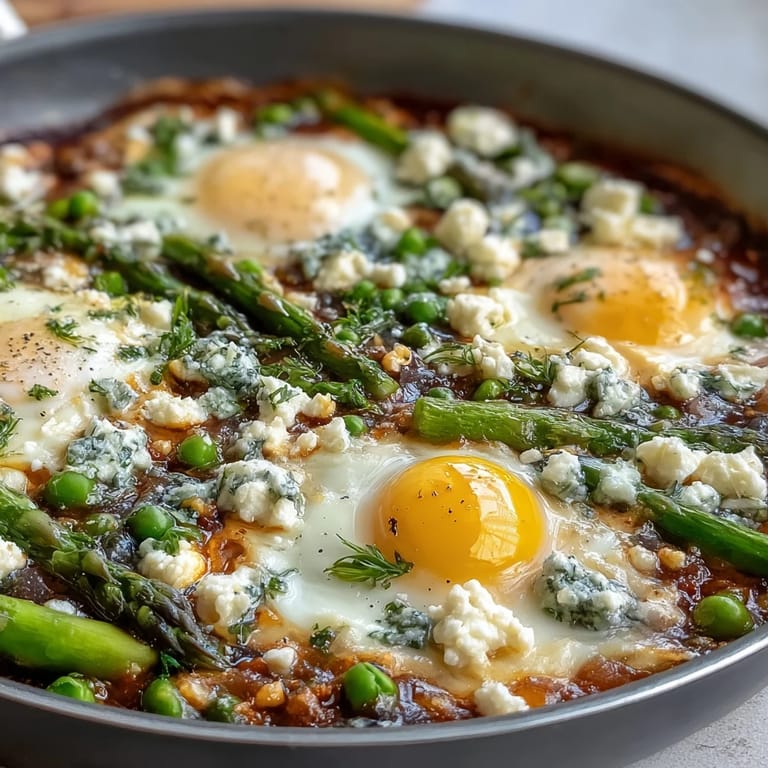
- Crack your eggs into the wells, then cover the pan and cook gently for 5 to 7 minutes—set a timer because this is the moment when everything changes. The whites will turn opaque while the yolks stay soft and jammy, which is exactly what you want; if you prefer firm yolks, cook for another 2 minutes, but you'll lose that luxurious quality.
- Finish and serve:
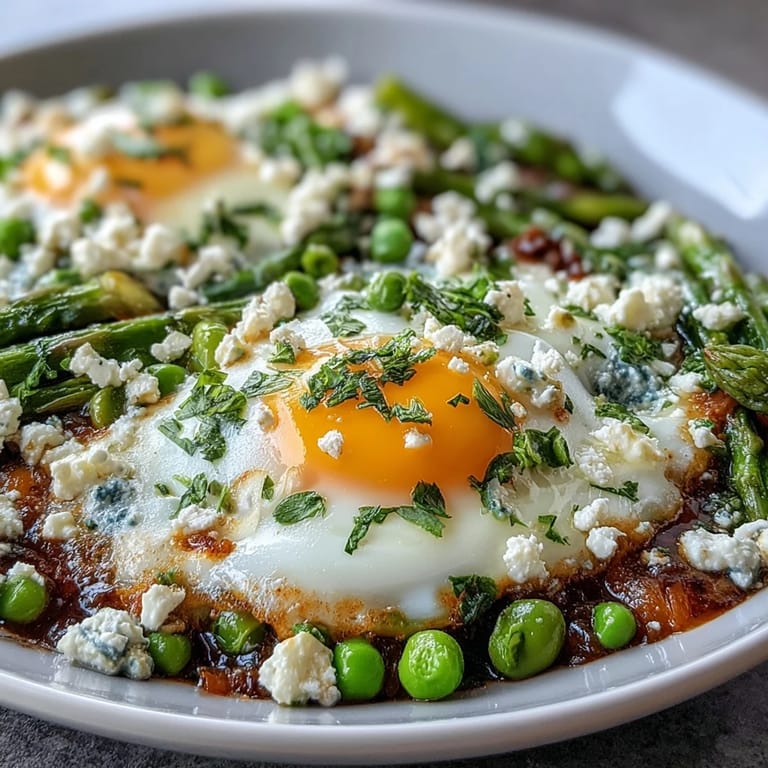
- Remove from heat and scatter the fresh parsley or mint over the top, followed by the crumbled feta if you're using it. Serve immediately from the skillet with lemon wedges on the side and warm bread, because you'll want to soak up every drop of sauce.
 Save to Pinterest
 My neighbor knocked on my door last spring because the smell of this dish drifting from my kitchen smelled like an apology for every time I've borrowed her basil. She ended up staying for dinner, and we sat on my small kitchen table with this one pan between us, cracking bread and laughing about how something this good shouldn't feel this easy.
Making It Your Own
This dish is forgiving in the way that the best spring foods are—it wants to celebrate what's fresh at the market, not fight against it. I've added crumbled goat cheese instead of feta when I was out of feta, thrown in fresh dill alongside the parsley, and once, when I had half a bag of wilted spinach taking up space in my crisper drawer, I added it with about 2 minutes left in the cooking time and watched it shrink into nothing while adding iron and earthiness. Some weeks I'll make it with more beans and less asparagus because that's what looked good on my way home from work. The skeleton of the recipe—the spiced sauce, the spring vegetables, the eggs—that's fixed and perfect. Everything else is yours to play with.
Serving and Storage
Serve this straight from the pan if you're eating with people you're comfortable with, or transfer it to a beautiful low serving dish if you want to feel slightly more composed. The dish is at its absolute best eaten immediately, while the eggs are still hot and slightly runny, and the herbs haven't had time to darken. If you have leftovers—which rarely happens in my house—you can refrigerate the sauce separately from the eggs and reheat gently the next day, cracking fresh eggs into the warmed sauce rather than trying to resurrect yesterday's.
Why This Works as a Spring Dish
There's a specific magic to eating fresh peas and broad beans when they've only just arrived at the market, before you've tired of them and moved on to summer squash. This recipe honors that moment—it doesn't overcomplicate or hide them, but instead creates this warm, spiced backdrop that lets them shine without apology. The asparagus adds a slight bitterness that keeps everything honest, while the eggs add richness that makes the whole thing feel like comfort food, which spring usually isn't. It's the bridge between the heavy soups of winter and the cold salads of high summer, and it tastes like relief.
- Make it vegan by skipping the eggs entirely and adding a can of drained chickpeas for substance and protein.
- If you find yourself with zucchini or spinach, both work beautifully added in the final few minutes of cooking.
- Serve with warm pita, flatbread, or sourdough to soak up the sauce, because the sauce is honestly the best part.
 Save to Pinterest
 This dish has become my answer to the question of what to cook when you want to feel alive again after a long week. It sits on the table like an invitation, and somehow, everyone always says yes.
Recipe FAQs
- → Can I make this ahead of time?
The vegetable base can be prepared up to a day in advance and refrigerated. When ready to serve, reheat gently and add the eggs for the final cooking stage.
- → What can I use instead of broad beans?
Edamame, lima beans, or additional peas work well as substitutes. You can also use chopped green beans for a similar texture and fresh spring flavor.
- → How do I know when the eggs are done?
The whites should be completely set and opaque, while the yolks remain slightly runny. This usually takes 5-7 minutes covered. For firmer yolks, cook an additional 2-3 minutes.
- → Can I freeze this dish?
The vegetable base freezes well for up to 3 months. However, it's best to add eggs fresh when reheating, as previously frozen egg whites can become rubbery in texture.
- → What bread goes best with shakshuka?
Crusty sourdough, warm pita, or flatbread are ideal for soaking up the spiced sauce. For gluten-free options, serve with gluten-free bread or rice.
- → How can I make this vegan?
Omit the eggs and feta. Add drained canned chickpeas or extra vegetables for protein. The dish remains satisfying and flavorful without animal products.