 Save to Pinterest
 There's something about the smell of garlic butter hitting warm bread that instantly makes a kitchen feel like home. My first real garlic bread moment wasn't actually at an Italian restaurant—it was a Saturday afternoon when a friend showed up unannounced with a loaf of sourdough and we were too hungry to wait for proper dinner. We threw together whatever butter and garlic we had, sliced thick pieces, and stuck them under the broiler. The result was so good we made it three more times that week. Now it's my go-to when I need something that tastes impressive but requires almost no effort.
I remember my mom's dinner parties in the nineties, when garlic bread was basically mandatory alongside her massive pasta spreads. It wasn't fancy, but people would fight over the last slice, which told you everything you needed to know. She'd always make extra because she knew what was coming—it disappeared faster than anything else on the table, even the main course.
Ingredients
- Baguette or Italian loaf: Choose something with a sturdy crust that won't collapse—day-old bread actually works better than fresh because it holds the butter without getting soggy.
- Unsalted butter: Softened butter spreads evenly and blends seamlessly with the other flavors, giving you control over the salt level.
- Fresh garlic: Mince it fine so it toasts evenly and disappears into the butter rather than leaving harsh chunks.
- Fresh parsley and chives: These aren't just decoration—they add brightness and a subtle herbaceous note that lifts the whole thing.
- Salt and pepper: Taste as you mix because you're essentially seasoning to preference here.
- Parmesan cheese: Optional but honestly worth the extra step; it adds a savory richness that takes things from good to memorable.
Tired of Takeout? 🥡
Get 10 meals you can make faster than delivery arrives. Seriously.
One email. No spam. Unsubscribe anytime.
Instructions
- Heat your cooking surface:
- Preheat the oven to 200°C (400°F) or get your grill medium-high and ready. A proper hot surface is what creates that crispy exterior you're after.
- Build your garlic butter:
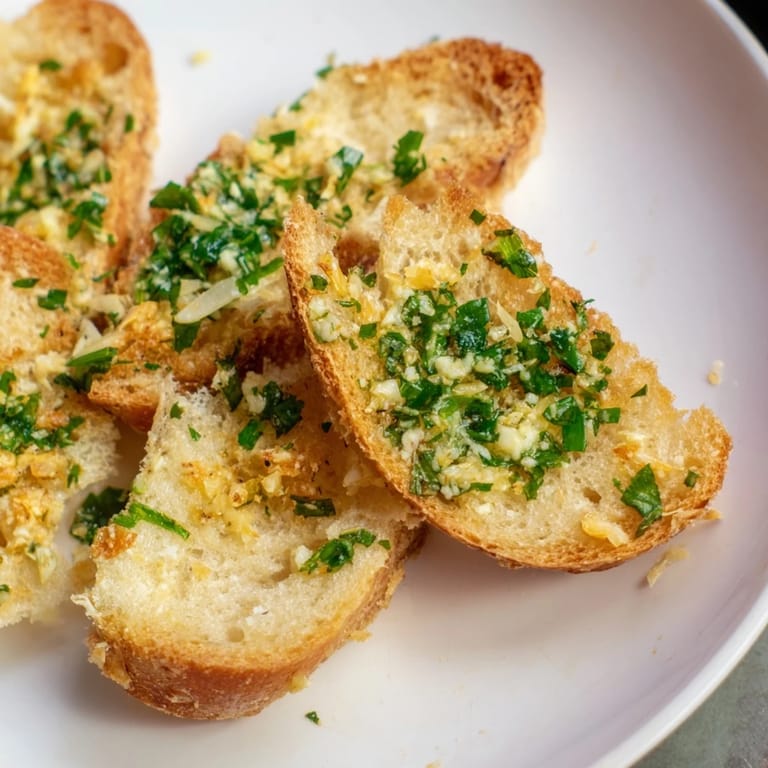
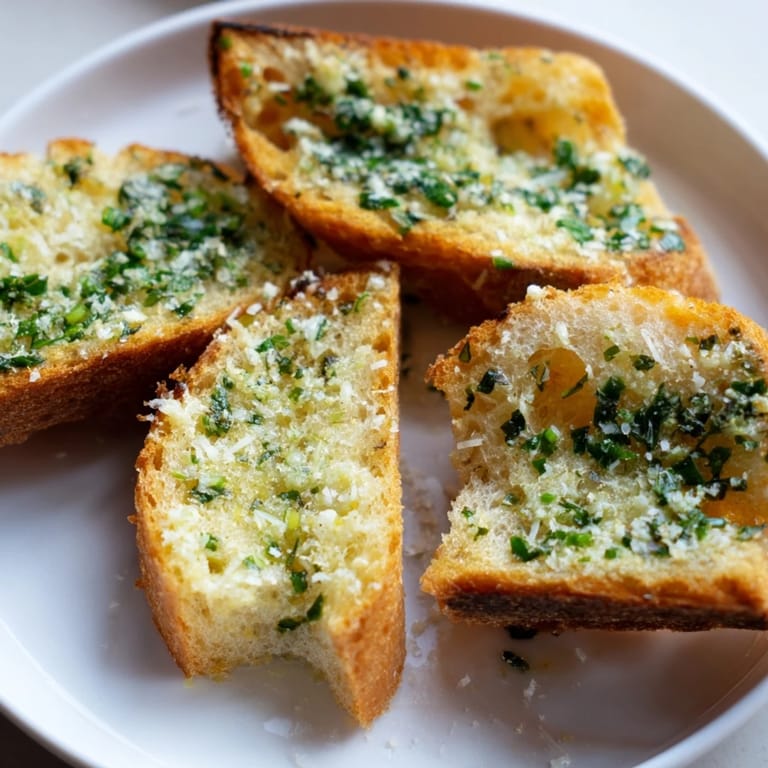
- Mash the softened butter with minced garlic, parsley, chives, salt, and pepper until it looks like a cohesive paste with visible flecks of green. Don't overthink it—you want texture, not a smooth spread.
- Prep and load the bread:
- Slice your loaf into thick pieces (about 2 cm) and lay them on a parchment-lined baking tray. Give each slice a generous coating of garlic butter, really working it into the surface so it soaks in a bit.
- Optional cheese layer:
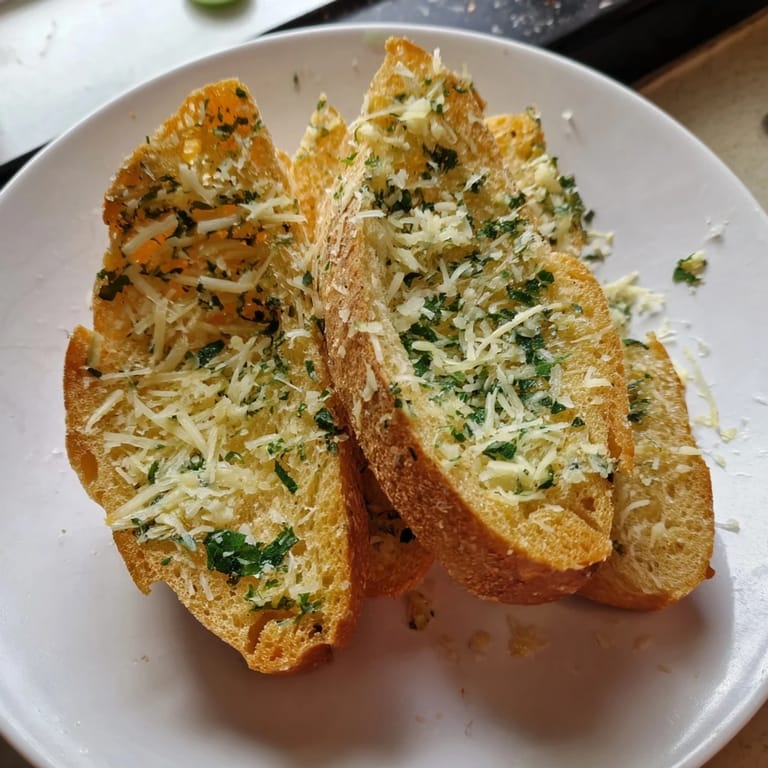
- If you're using Parmesan, sprinkle it over the buttered slices now. It'll toast and turn golden, adding a salty depth.
- Toast to golden:
- Bake for 8–10 minutes until the bread is crispy and golden with slightly darker edges, or grill for 2–3 minutes per side. Watch it toward the end because the line between golden and burnt is quicker than you'd think.
- Serve warm:
- Pull it from the heat while it's still warm and the butter is slightly melted, then eat it immediately while it's at its peak.
 Save to Pinterest
 There was a moment at a casual dinner party where someone who usually ordered everything delivery took a bite of my garlic bread and just paused. They asked for the recipe on the spot, not because it was complicated, but because it tasted like someone actually cared. That's when I realized this isn't about skill—it's about using good ingredients and not overthinking it.
When to Use Garlic Bread
Garlic bread is the ultimate supporting player. With pasta and red sauce, it's essential—you need something to soak up the flavors left on your plate. For lighter soups or salads, it adds substance without competing. Even on its own with a cold drink, it works as an afternoon snack or a casual appetizer when friends drop by.
Variations Worth Trying
A pinch of chili flakes in the butter turns this into something with attitude—not spicy, just a subtle warm note that wakes everything up. For a different texture, try whole grain bread or sourdough, which have more personality than plain baguettes. Vegan butter works surprisingly well if you're cooking for plant-based diets, and the results are nearly identical.
The Details That Matter
The thickness of your slices affects everything—too thin and it becomes a chip, too thick and the inside won't warm through. The oven temperature matters because you want gentle toasting, not aggressive browning that turns the garlic bitter. Storage-wise, eat it fresh because garlic bread doesn't really improve as leftovers, though it reheats okay for a quick snack.
- Let butter soften to room temperature for at least 30 minutes before mixing—cold butter won't spread evenly.
- Toast the cut side first if you're using a grill, then flip to warm the skin side briefly.
- Make extra garlic butter and freeze it in small portions for the next time the craving hits.
 Save to Pinterest
 Garlic bread is proof that you don't need a complicated recipe to feel like someone made an effort. It's the kind of thing that makes ordinary meals feel a little more generous.
Recipe FAQs
- → What type of bread works best?
A baguette or Italian loaf sliced about 2 cm thick provides the ideal structure for crisping while maintaining softness inside.
- → Can I use other herbs besides parsley and chives?
Yes, fresh herbs like basil or oregano can be added to the butter mixture for varied flavor profiles.
- → How do I achieve a crispy crust?
Baking at around 200°C (400°F) or grilling for a few minutes per side until golden ensures a crunchy texture.
- → Is Parmesan necessary?
The grated Parmesan is optional, adding a subtle savory layer but the garlic herb butter alone delivers great taste.
- → Can this be made dairy-free?
Yes, substitute unsalted butter with vegan butter to keep the rich garlic flavor without dairy.