 Save to Pinterest
 My neighbor Maria handed me a warm slice of eggplant Parmesan through her kitchen window one September evening, steam still rising from the cheese. I'd spent years avoiding eggplant, convinced it was watery and bitter, but this was nothing like that—crispy on the outside, tender within, draped in sauce and melted mozzarella that tasted like she'd been perfecting it since childhood. She smiled and said, 'You make it when the eggplants are good,' and I realized she was right. This dish taught me that sometimes the simplest ingredients, treated with care and a little patience, become something that stays with you.
I made this for a dinner party last fall and my friend Jake—who claims to dislike vegetables—came back for thirds. Watching him discover that eggplant could be this good was worth every minute of prep work. He even asked for the recipe, which I knew meant something had shifted in his kitchen adventures.
Ingredients
- 2 large eggplants, sliced into 1/2-inch rounds: The size matters here because thinner slices cook through too quickly and lose their structure, while thicker ones stay raw inside. Look for eggplants that feel heavy for their size with tight, glossy skin.
- 1 teaspoon salt (for sweating eggplants): This step removes the water that makes eggplant soggy and bitter. Don't skip it, and don't rinse the eggplant afterward—just pat it dry.
- 1 cup all-purpose flour: The first layer of your breading station, creating a dry surface for the egg to cling to.
- 2 large eggs, beaten: The glue that holds everything together; make sure they're well beaten so they coat evenly.
- 1 1/2 cups Italian-style breadcrumbs: Italian breadcrumbs have finer texture than panko and brown more evenly. If you only have panko, pulse it in a food processor to make it finer.
- 1/2 cup grated Parmesan cheese (for breading): This adds a savory punch to the breading and helps it brown beautifully.
- 1 teaspoon dried oregano and 1/2 teaspoon black pepper: These season the coating itself, so every bite tastes complete.
- 2 cups marinara sauce: Use a sauce you genuinely like, because it's the flavor backbone here. Homemade is lovely, but a good store-bought sauce works just fine.
- 2 cloves garlic, minced: Blooming the garlic in oil before adding the sauce mellows it and deepens the flavor.
- 1 tablespoon olive oil: For sautéing the garlic and infusing the sauce with richness.
- 2 cups shredded mozzarella and 1/2 cup Parmesan (for layering): Mozzarella melts silky, while Parmesan adds salt and complexity. Don't use pre-shredded mozzarella if you can avoid it—the anti-caking agents make it melt unevenly.
- 1/4 cup fresh basil, chopped: A brightness at the end that reminds you this is Italian, not heavy.
Tired of Takeout? 🥡
Get 10 meals you can make faster than delivery arrives. Seriously.
One email. No spam. Unsubscribe anytime.
Instructions
- Preheat and prepare:
- Set your oven to 400°F and line two baking sheets with parchment paper. This prevents sticking and makes cleanup a joy.
- Sweat the eggplants:
- Lay your eggplant slices on a rack (or paper towels if you don't have a rack) and sprinkle both sides generously with salt. Wait 20 minutes while the salt draws out the moisture and bitterness. You'll see beads of water appear—that's the magic happening. Pat everything dry with fresh paper towels.
- Set up your breading station:
- Arrange three shallow dishes in a row: flour in the first, beaten eggs in the second, and the breadcrumb mixture (combined with Parmesan, oregano, and pepper) in the third. This assembly-line approach keeps your hands manageable and your breading consistent.
- Bread the eggplants:
- Work through each slice methodically—coat in flour, shake off excess, dip in egg, then roll in breadcrumbs. Press gently so the coating adheres. Arrange on your prepared baking sheets in a single layer without crowding.
- Bake the breaded slices:
- Bake for 20 minutes, flipping halfway through, until they're golden and crispy on both sides. You're aiming for that satisfying crunch you'd get from frying, but with far less oil.
- Make the sauce:
- While the eggplants cook, heat olive oil in a saucepan and sauté the minced garlic for about a minute—you want it fragrant, not brown. Pour in your marinara sauce and let it simmer gently for 5 minutes to meld the flavors.
- Assemble the layers:
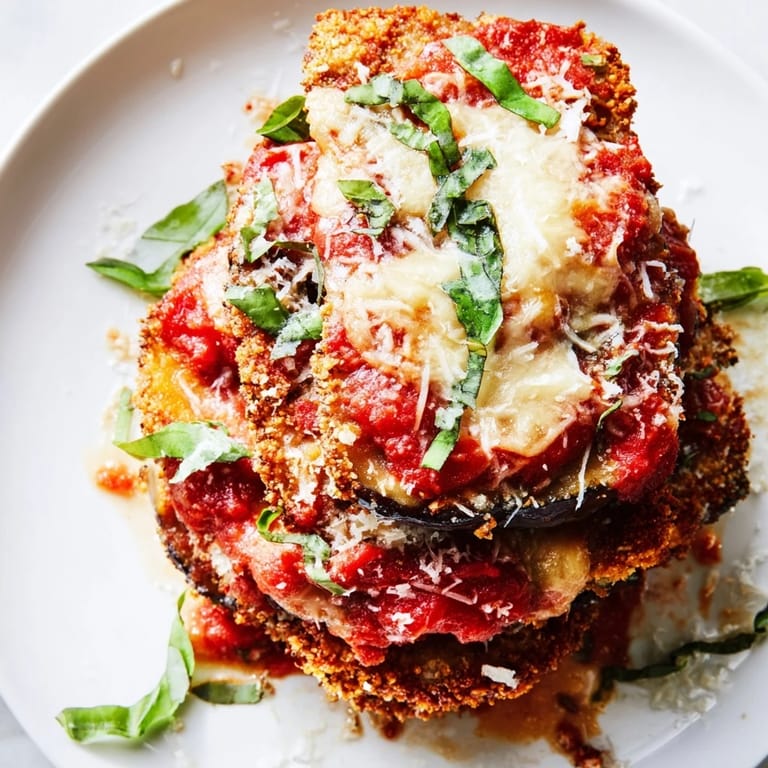
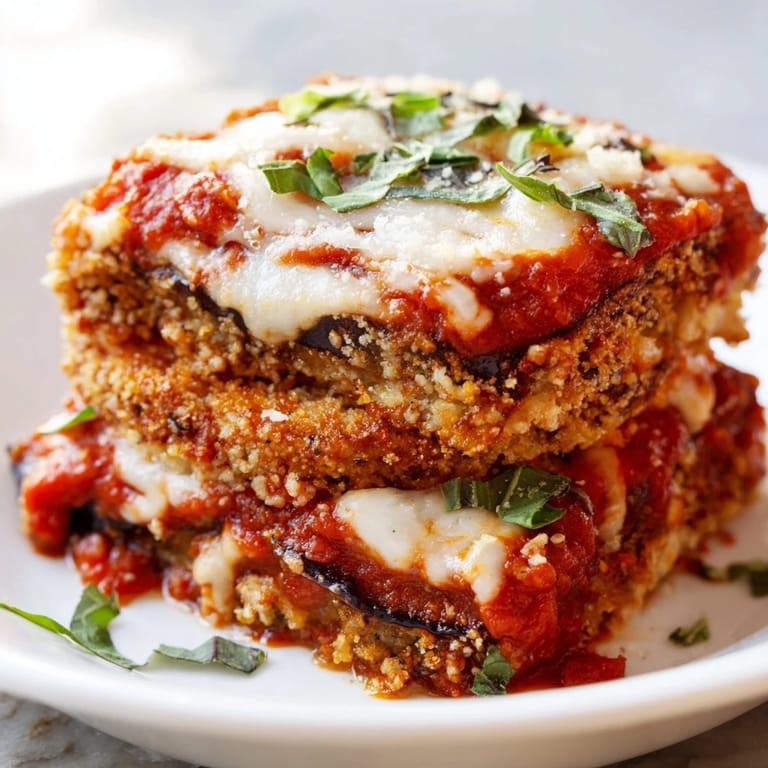
- Spread about 1/2 cup of sauce across the bottom of your 9x13-inch baking dish. Layer half your baked eggplant slices over that, then cover with half the remaining sauce. Scatter half the mozzarella and a sprinkle of Parmesan on top. Repeat the layers with the remaining eggplant, sauce, and cheeses. You're building flavor and texture with each layer.
- Final bake:
- Slide the assembled dish into the oven uncovered for about 25 minutes. Watch for the cheese to turn bubbly and golden—that's your signal it's done. Let it rest for 10 minutes; this lets everything set so you can slice it cleanly. Garnish with fresh basil if you have it.
 Save to Pinterest
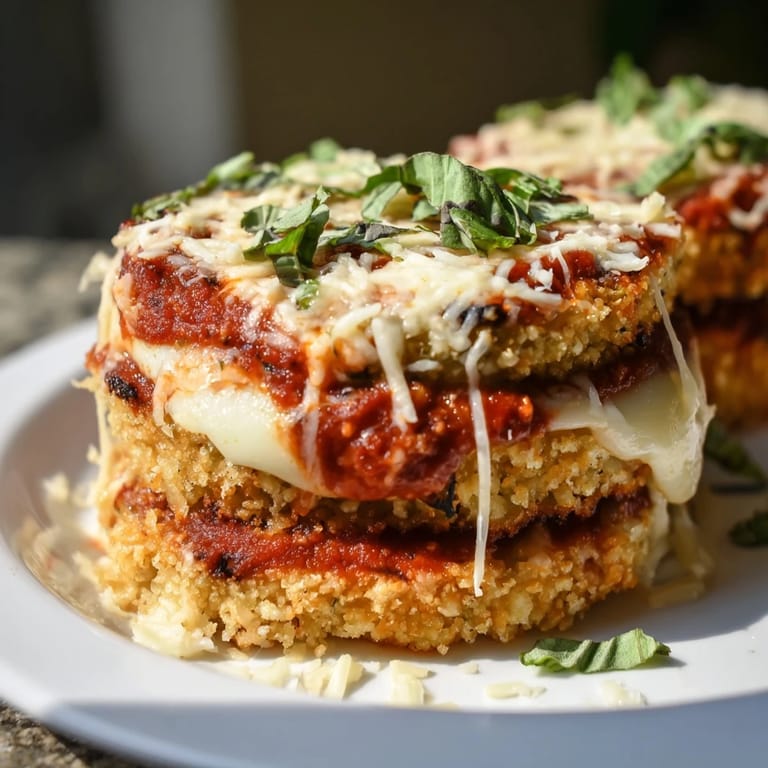
 There's a moment, when you pull this from the oven and the cheese is bubbling golden at the edges, that you realize you've created something worth sharing. This dish has a way of bringing people to the table.
Why Eggplant Deserves Better
Eggplant gets a bad reputation because it's often cooked poorly—boiled into mushiness or fried until it's an oil sponge. But when you salt it properly and give it a good breading, it becomes something entirely different: tender inside, with a sophisticated earthiness that pairs beautifully with bright tomato sauce. The breading isn't there to hide the eggplant; it's there to honor it, creating contrast and texture. Once you master this technique, you'll start seeing eggplant as a blank canvas for all sorts of flavor combinations.
The Cheese Question
Using good mozzarella makes a real difference here. If you can find fresh mozzarella at a local market, you could even layer it in at the end, just before serving, for a completely different texture—stretchy and creamy instead of fully melted. The Parmesan adds an essential umami backbone, so don't skip it or replace it with more mozzarella. And please, buy a block and grate it yourself; pre-shredded cheese has anti-caking agents that prevent proper melting.
Variations and Occasions
This is endlessly adaptable once you understand the basic structure. Some people add a layer of ricotta mixed with egg between the eggplant and sauce for extra richness. Others fry the eggplant slices instead of baking them for maximum crispiness. You could add roasted red peppers, fresh spinach, or mushrooms to create new variations. The beauty of Eggplant Parmesan is that it works as a cozy weeknight dinner or elegant enough for guests, and it actually improves when made a day ahead and reheated.
- Try mixing a beaten egg into ricotta cheese and spreading it between layers for a creamy texture.
- Frying the eggplant in olive oil instead of baking it gives you extra crunch, though it's more oil-intensive.
- Make it ahead and refrigerate unbaked for up to 24 hours—it bakes beautifully straight from cold.
 Save to Pinterest
 Eggplant Parmesan reminds me that cooking is really about patience and respect for ingredients. Make it once, and you'll understand why it's been an Italian favorite for generations.
Recipe FAQs
- → How do I make the eggplant slices crispy?
Salting the eggplant slices beforehand draws out excess moisture, which helps them crisp up in the oven when breaded and baked. Flipping halfway ensures even browning.
- → Can I substitute the breadcrumbs with gluten-free options?
Yes, gluten-free breadcrumbs can be used in the breading mixture without affecting the overall texture significantly.
- → Is frying the eggplant an option instead of baking?
To enhance crispiness, you may shallow fry the breaded eggplant slices in olive oil before layering for baking.
- → What cheeses are recommended for layering?
Mozzarella provides melting creaminess, while grated Parmesan adds sharp, savory depth in the layers.
- → How should I garnish the dish for best flavor?
Fresh chopped basil sprinkled over the finished bake adds a bright, aromatic note that complements the rich tomato sauce.