 Save to Pinterest
 I discovered this tart on a market morning when the asparagus vendor insisted I buy a bundle, swearing it was the first real crop of the season. The spears were so thin and tender they practically bent like grass, and something about their bright green color made me want to do right by them—not overcomplicate, just celebrate. That afternoon, I found myself with puff pastry in the fridge and creamy cheese, and the tart came together almost by accident, like the dish had been waiting for those exact ingredients to find each other.
I made this for a friend's outdoor dinner last April when we were all desperately sick of winter food. Someone arrived early and caught me arranging the asparagus spears in a crosshatch pattern, and they teased me mercilessly until they tasted it and went completely quiet. That silence, then the immediate second slice—that's when I knew this tart had earned its place in my regular rotation.
Ingredients
- Thin asparagus (about 400 g): The thinner spears cook evenly and stay tender, unlike thick ones that can turn woody in the center—look for bundles where the spears bend slightly without snapping.
- Crème fraîche or ricotta (200 g): This is your creamy base that won't dry out during baking; crème fraîche tastes richer and more luxurious, but ricotta works beautifully if that's what you have.
- Gruyère or Parmesan cheese (100 g): Gruyère melts into the filling with a subtle nuttiness, while Parmesan adds a sharper, more crystalline bite—choose based on your mood.
- Egg (1, lightly beaten): This is purely for brushing the pastry border to give it that glossy, bronzed finish.
- All-butter puff pastry (1 sheet, approximately 250 g): Thaw it completely before using, and let it rest at room temperature so it doesn't crack when you unfold or roll it.
- Fresh chives or dill (2 tbsp): Chives are delicate and oniony; dill brings an almost herbal earthiness—either one brightens the cheese without overpowering it.
- Lemon zest (1 tsp): Just the colored part, not the bitter white pith; this adds a whisper of brightness that ties the whole tart together.
- Salt and freshly ground black pepper: Taste as you mix the filling because the cheese already has salt built in, and you don't want it oversalted.
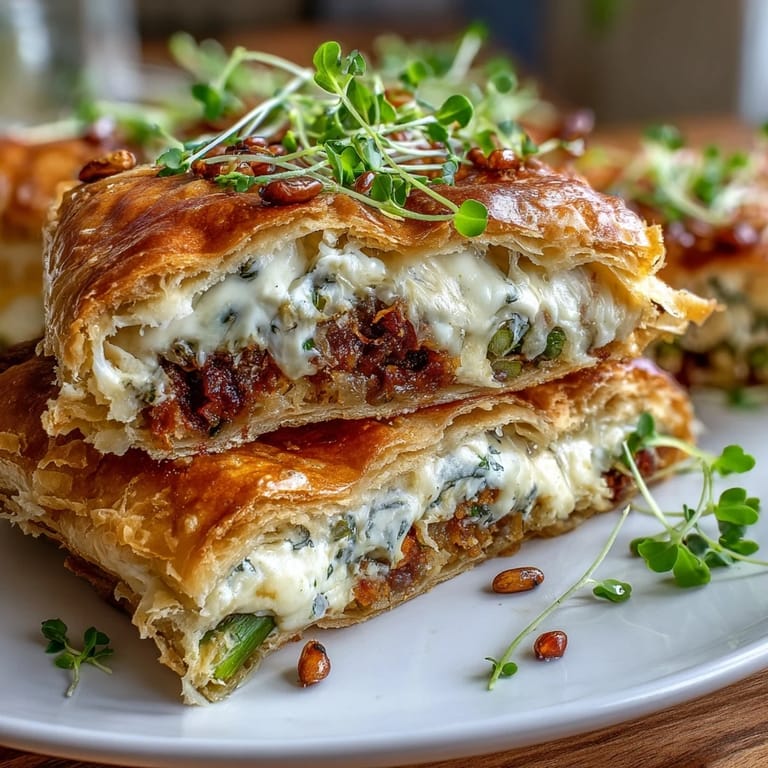
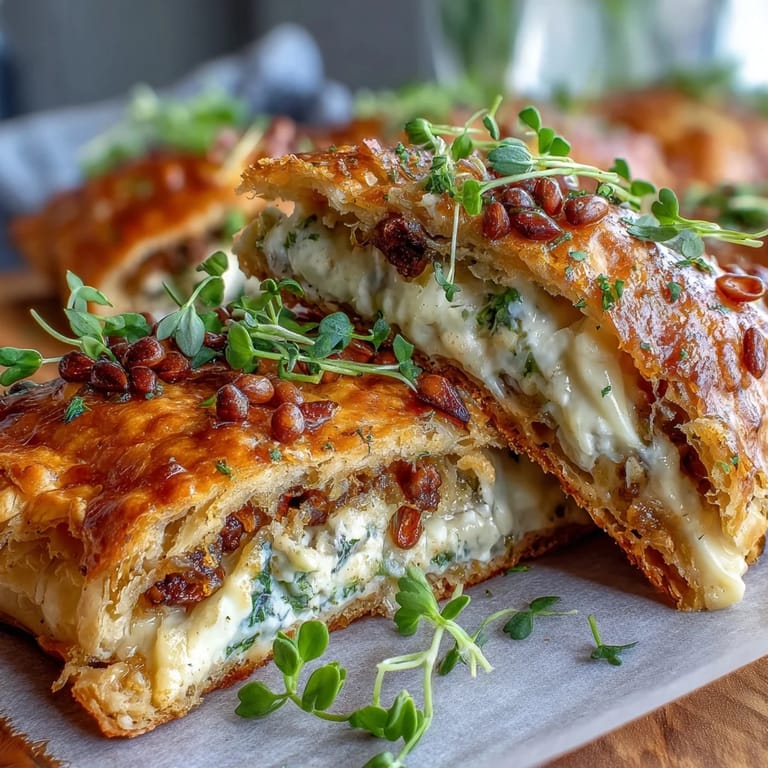
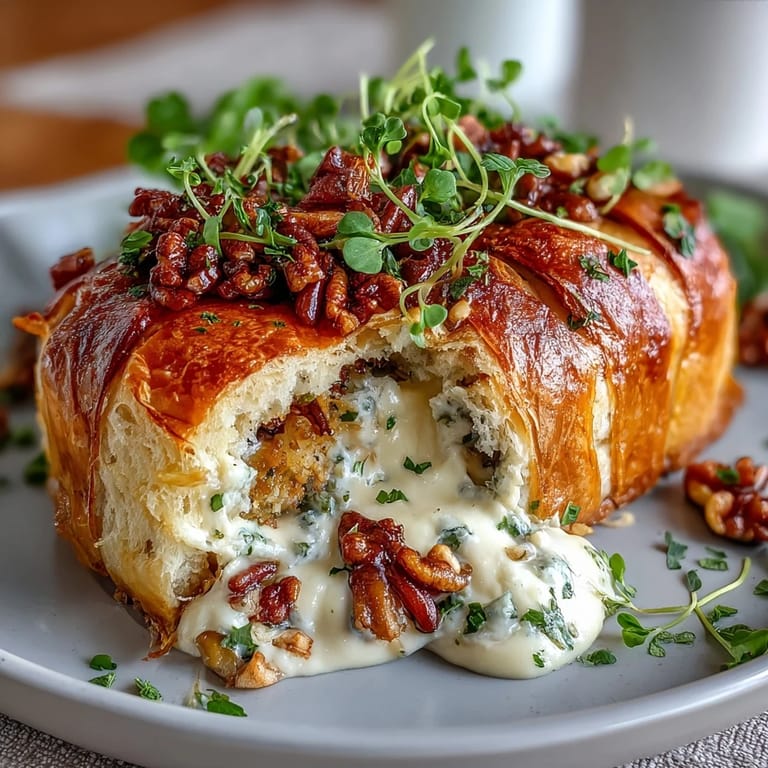
- Toasted pine nuts and microgreens (optional): These are the garnish that makes people think you spent all day on this; the pine nuts add a subtle crunch and richness.
Tired of Takeout? 🥡
Get 10 meals you can make faster than delivery arrives. Seriously.
One email. No spam. Unsubscribe anytime.
Instructions
- Heat your oven and prepare the stage:
- Preheat to 200°C (400°F) and line your baking tray with parchment paper so the pastry slides off easily and nothing sticks. Everything should be ready before you touch the pastry because it warms up quickly and becomes harder to handle.
- Get your pastry ready to shine:
- Roll out the thawed puff pastry gently into a rectangle about 25 by 35 centimeters, working on a lightly floured surface. If it starts resisting, let it rest for a minute—the gluten just needs a breath—then transfer it to your prepared tray.
- Score the borders with intention:
- Using a sharp knife, score a border about 2 centimeters from the edge all the way around, pressing firmly but not cutting all the way through—you're creating a boundary that will puff up and frame your filling. Prick the inner rectangle with a fork in a scattered pattern so it doesn't puff up too much and stays flat as a base.
- Mix the creamy filling:
- In a bowl, combine the crème fraîche with half the grated cheese, your chopped herbs, lemon zest, salt, and pepper, stirring until everything is evenly distributed. Taste it straight from the spoon and adjust seasoning because this is where all your flavor lives.
- Spread and arrange with care:
- Spread the cheese mixture evenly across the inner rectangle, staying inside that scored border, then lay your asparagus spears on top in whatever pattern appeals to you—straight lines, a crosshatch, or just casual and free. If you want something fancy, alternate the direction of the spears, but honestly, they all end up golden and delicious regardless.
- Egg wash and final cheese layer:
- Brush the pastry border with beaten egg using a pastry brush or even a clean finger, then scatter the remaining cheese over the asparagus spears. This is what turns the edges golden and the top savory-crisp.
- Bake until golden and tender:
- Slide it into the oven and bake for 20 to 25 minutes until the pastry has puffed up and turned deep golden brown and the asparagus tips have softened slightly. You'll smell it long before it's done—that nutty, buttery aroma is how you know magic is happening.
- Cool, garnish, and serve:
- Let it rest for a few minutes, then scatter with toasted pine nuts and microgreens if you're using them, and cut into portions. Serve it warm or at room temperature—both are equally good, which is the beauty of this tart.
 Save to Pinterest
 There's something about serving food that requires no last-minute hovering or reheating that changes the whole vibe of entertaining. I realized watching people eat this tart that sometimes the most impressive dishes are the ones that let you actually sit down and enjoy your guests instead of running back to the kitchen.
Why Asparagus Deserves This Treatment
Spring asparagus is so brief and particular that it asks for a recipe that respects its season without drowning it in complicated sauces. This tart lets the asparagus be the star while everything else—the buttery pastry, the creamy base, the bright herbs—plays supporting roles that make it sing louder.
Making This Tart Your Own
The beauty of this formula is how it welcomes small changes without falling apart. I've made it with goat cheese when I wanted something tangier, added a whisper of garlic to the filling, and even tucked thin slices of prosciutto underneath the asparagus when I wasn't cooking vegetarian and wanted to lean into richness.
Timing and Temperature Notes
The oven temperature matters more than you'd think because puff pastry needs genuine heat to puff and crisp rather than just soften and slump. If your oven runs cool, which many do, don't hesitate to nudge the temperature up slightly and keep an eye on things.
- Start checking for doneness around the 20-minute mark so you catch the pastry at golden rather than dark brown.
- The asparagus continues cooking slightly after it comes out of the oven, so pulling it when the tips are just tender keeps them from turning mushy.
- Leftover tart keeps well covered in the fridge and tastes just fine the next day cold or warmed gently in a low oven.
 Save to Pinterest
 This tart has become my answer to the question of what to make when you want something that looks like you tried but honestly feels effortless. It's proof that the best dishes are often the simplest ones, where good ingredients and a little confidence are all you really need.
Recipe FAQs
- → What type of pastry is best for this tart?
All-butter puff pastry works best, providing a flaky and golden base that beautifully supports the toppings.
- → Can I use a substitute for crème fraîche in the filling?
Yes, ricotta or goat cheese can be used for a creamy texture with a slightly different flavor profile.
- → How should asparagus be prepared before assembling the tart?
Trim the woody ends and use thin spears for even cooking and an elegant presentation.
- → What herbs complement the flavors in this tart?
Fresh chives or dill add a delicate herbal note that pairs well with the cheese and asparagus.
- → Is it necessary to score the pastry before baking?
Scoring a border helps create a raised edge that contains the filling while allowing the center to puff beautifully.