 Save to Pinterest
 The first time I made key lime pie was on a whim—I'd just discovered a bottle of key lime juice at the farmer's market and couldn't resist. What started as curiosity became an obsession when I realized how beautifully simple the recipe was. That tangy-sweet filling and crispy crust combination had me convinced I'd stumbled onto something magical. Now, years later, I make this pie whenever I need to feel like I'm sitting on a porch somewhere warm, even if it's freezing outside my kitchen window.
I'll never forget bringing this to my neighbor's Fourth of July barbecue and watching people go completely silent after their first bite. There's something about that moment when a dessert just works—when the flavors are so balanced that everyone reaches for a second slice without thinking about it. That's when I knew this recipe was the one I'd keep making forever.
Ingredients
- Graham crackers: The foundation of everything—look for ones without too much honey or you'll oversweeten the crust, and crushing them by hand (or in a food processor) makes a real difference in texture.
- Unsalted butter: This is crucial because you're already salting the crust intentionally, so you want control over how much sodium goes in.
- Sweetened condensed milk: This is the secret ingredient that makes the filling so silky and eliminates the need to bake it to a hard set—trust the recipe on this one.
- Key lime juice: If you can't find key limes, bottled key lime juice works perfectly and honestly saves you from squeezing dozens of tiny limes.
- Egg yolks: Don't skip or substitute these—they're what give the filling its velvety richness and help it set properly without being rubbery.
- Heavy cream: Make sure it's truly cold when you whip it, or you'll end up with something closer to butter than clouds.
Tired of Takeout? 🥡
Get 10 meals you can make faster than delivery arrives. Seriously.
One email. No spam. Unsubscribe anytime.
Instructions
- Toast the crust foundation:
- Combine your crushed graham crackers with melted butter, sugar, and salt in a bowl until it feels like damp sand. Press it firmly into your pie pan—don't be gentle here, or it'll crumble when you slice it later. Bake for 10 minutes until it's lightly golden and smells incredible.
- Build the filling:
- Whisk together condensed milk, key lime juice, lime zest, and egg yolks until completely smooth—no streaks of yellow yolk should remain. This is where the magic starts, even though it doesn't look like much yet.
- Bake with intention:
- Pour the filling into your warm crust and bake for exactly 15 minutes—the center should still have a tiny bit of wobble when you shake the pan gently. This wobble is not a mistake; it's how you know the texture will be perfect after chilling.
- Chill and transform:
- Let it cool completely at room temperature, then refrigerate for at least 2 hours. This waiting period is when the pie truly sets and the flavors meld into something better than the parts.
- Crown with clouds:
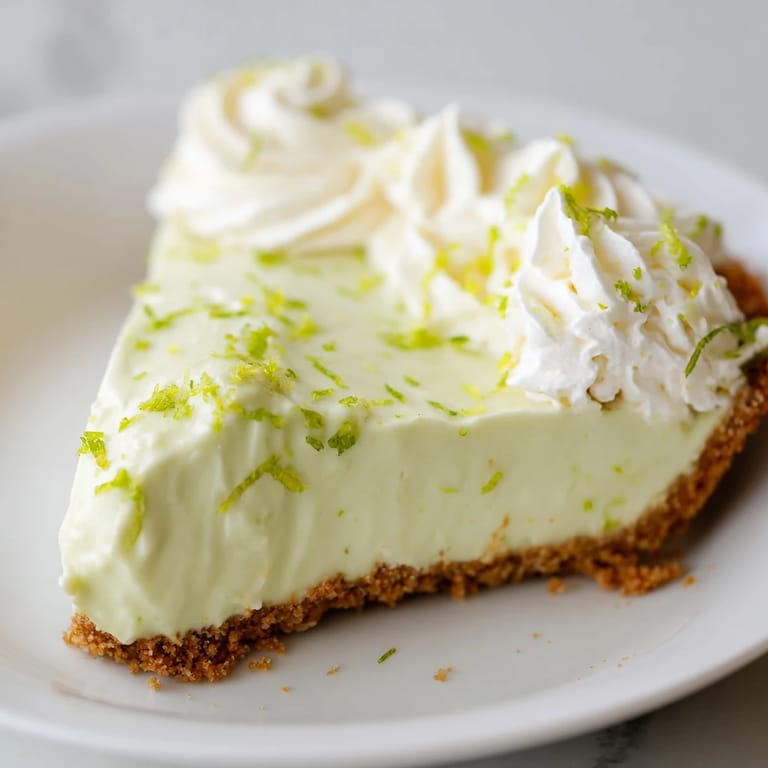
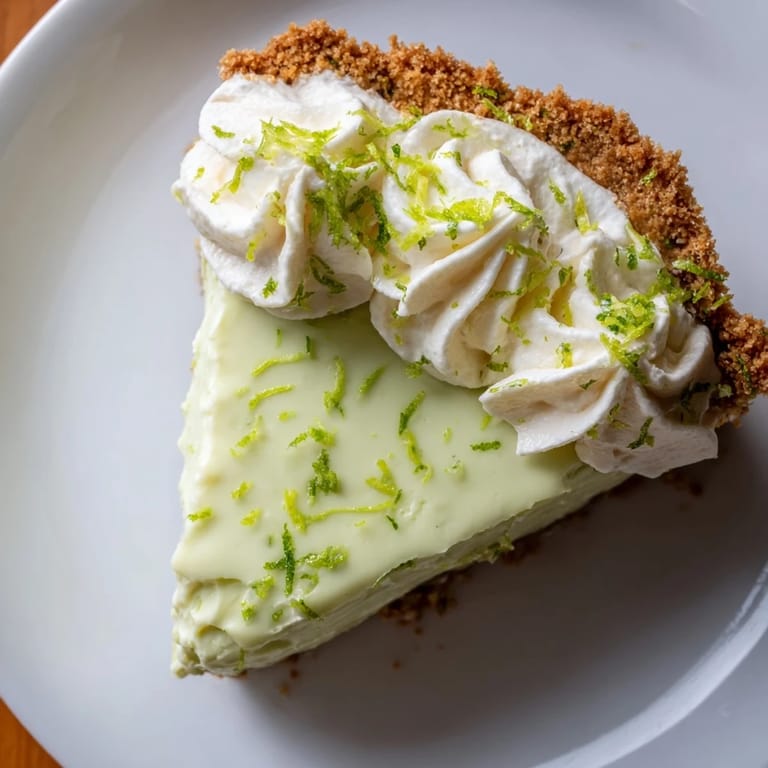
- Whip your cold heavy cream with powdered sugar and vanilla until medium peaks form—soft, not stiff. Dollop or pipe it over the chilled pie just before serving, then scatter lime zest over the top like you're finishing something precious.
 Save to Pinterest
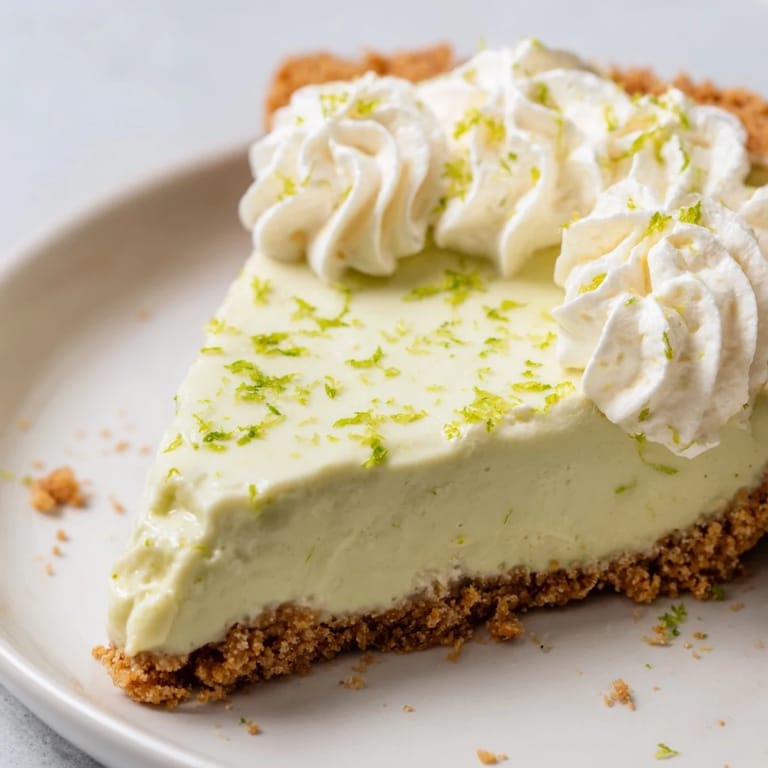
 There's a moment when you pull this pie out of the fridge after those two hours of waiting and notice how the filling has transformed into something almost impossibly smooth and set. That's the moment you remember why you bake—it's pure chemistry, and you just orchestrated it perfectly.
The Graham Cracker Question
I used to think all graham crackers were the same until I started noticing which ones made a crust that stayed crispy versus one that went soft. Honey-based ones taste sweeter and can make the overall pie cloying, while the more neutral ones let the lime be the star. Now I always check the ingredient list, and honestly, it's one of those small choices that makes a noticeable difference.
Why This Pie Doesn't Need to Be Complicated
Key lime pie became an American classic precisely because it's straightforward—no temperamental meringues, no finicky baking temperatures, no waiting for gelatin to set. The beauty is in the simplicity and in how few ingredients actually create such a complex flavor. This is the kind of dessert that teaches you that more isn't always better.
Serving and Pairing Wisdom
This pie is best served cold and eaten with a fork that cuts cleanly through both layers—if your fork is tearing the filling, your pie might not have chilled long enough. The tartness pairs beautifully with almost anything, but I've found it's especially lovely after a rich dinner where you want something bright and refreshing rather than heavy.
- A glass of cold Riesling or even a light dessert wine elevates this from casual to special without any extra effort on your part.
- Leftovers keep beautifully in the fridge for three days, and honestly, cold pie for breakfast the next morning is a small joy worth experiencing.
- If you want to make this ahead for entertaining, assemble everything except the whipped cream topping up to 24 hours in advance.
 Save to Pinterest
 This pie has become my go-to when I want to impress someone without spending hours in the kitchen. It's a reminder that some of the best things in life are both simple and unforgettable.
Recipe FAQs
- → What can I use if key limes aren’t available?
Regular limes provide a similar tartness and can be used as a substitute without significantly altering the flavor.
- → How do I achieve a crisp crust?
Mix crushed graham crackers with melted butter and sugar, then firmly press into the pan before baking for best texture.
- → Can I replace whipped cream with something lighter?
Yes, Greek yogurt can be used as a lighter alternative topping, providing a creamy finish with less fat.
- → Is chilling essential for the filling?
Chilling allows the filling to fully set and the flavors to meld, resulting in a creamier and firmer texture.
- → How can I make the crust gluten-free?
Use certified gluten-free cookies instead of graham crackers to accommodate gluten sensitivities.
- → What are ideal serving suggestions?
Pair slices with a chilled glass of Riesling or fresh lime slices for enhanced flavor contrast.